5 Counter-Intuitive Truths About the Looming “Timeline Split”
The Architecture of Reality By Steafon Perry Introduction: The Felt Shift Lately, I have felt something I can only describe as a migration in the rules of the world. Not just “a lot is happening” fatigue. Not just political disagreement. More like the medium we used to share, the shared reality layer, has started to behave differently. When people tell me it feels like the “texture” of reality changed, I get it. What I think we are actually watching is not only a social divide but also an ontological fracture. In plain language, people are no longer disagreeing inside the same frame. They are operating with different assumptions about what counts as real, what counts as evidence, and what counts as meaningful. My working synthesis pulls from aetheric theory as a symbolic and energetic vocabulary, selective interpretations of quantum physics as an informational metaphor, and consciousness research as the missing variable in modern institutional models. The “Timeline Split,” as I use it, is a way to name a literal divergence in the informational field that people participate in through attention, belief, and coordinated action. This “receiver” framing aligns with ideas from The Living Field Studio, especially the theme that perception is tuned, not merely received, as explored in “Tuning the Receiver: Reconnecting to the Living Field”. What follows are five truths that sound counterintuitive at first but start making sense once you see reality as participatory and informational. Takeaway 1: Magic is a Discipline of Pitch, Rhythm, and Concentration The High Cost of Mental Static When I talk about Artifice, or aetheric magic, I am not talking about a genetic gift. I am talking about a discipline. The difference between an Adept and an accidental “Wizard” is not talent; it is repeatability, containment, and precision. In my model, influence over reality depends on correctly focused thought. That “correctly” matters. It is not vague wishing. It is more like tuning, like music. Pitch, rhythm, and concentration are not poetic flourishes here, they are the mechanics. This is why I point people to the physical metaphor of resonance. The Earth ionosphere cavity supports electromagnetic standing waves known as the Schumann resonances, with a fundamental mode often cited around 7.83 Hz. I am careful with the claim: I am not saying that frequency proves magic. I am saying resonance is a real phenomenon, and it is a useful scaffold for understanding why coherence, timing, and stability matter in any practice of intention. Where things break today is concentration. Our environment is engineered for fragmentation. Attention is constantly interrupted, anxiety is normalized, discomfort is chronic, self-doubt is cultivated. If you cannot hold a steady signal internally, you become programmable externally. In that condition, you do not architect your reality tunnel. You inherit whatever tunnel the environment can impose. And yes, confidence is functional. If conviction collapses, the spell collapses. Even if you translate “spell” into psychology, the mechanism still stands. Doubt breaks follow-through. Broken follow-through breaks outcomes. Takeaway 2: The “Psychoid” Layer is the Bridge Between Mind and Matter Where Thoughts Become Things I lean on the psychoid concept because it gives me a language for a bridge, a tertium, between the physical and the psychical. One reference point for the term is “Psychoid” (Junguipedia), and the historical context of Jung and Pauli’s shared concern with psychophysical unity is outlined in “Jung and Pauli: A Meeting of Rare Minds” (Princeton, PDF excerpt). Here is how I use it: the psychoid is the interface layer where “inner” and “outer” have not fully separated yet. This is where thoughts can become events, not through cartoon causality, but through patterning. Your internal state influences what you notice, what you reinforce, what you tolerate, what you pursue, and what you coordinate with others. In my synthesis, the aether, or the quantum vacuum as a metaphorical informational substrate, is the “field” in which patterning can propagate. Again, not orthodox physics. It is a metaphysical architecture that helps explain why inner life is not a side story. It is upstream. If you accept that, then archetypes are not just stories in the head. They become organizing patterns for both perception and lived events. The psychoid is the operating system layer, and the archetypes are recurring programs. Takeaway 3: Reality is a Participatory, Holographic Projection Rewriting the Informational Substrate When I say “participatory,” I am pointing to the philosophical implications of observer involvement. John Wheeler is a key figure in that lineage, see John Archibald Wheeler. A strong interpretive profile that captures the tension between observation, meaning, and reality construction is “John Wheeler Saw the Tear in Reality” (Quanta Magazine). When I say “holographic,” I am borrowing a real theoretical physics concept as a framing device. The Holographic principle is, in physics, about how a higher-dimensional region can be encoded on a lower-dimensional boundary. I use it to underline a practical point: what you experience as “solid reality” may be downstream of information constraints and interpretation layers. This is where the Timeline Split becomes legible. If groups adopt incompatible foundational assumptions, they begin to encode different “data” into their shared field of attention. They share geography, but they no longer share premises. From there, the divergence is not just interpretive. It becomes behavioral, institutional, and eventually material. So when I say “changing the information changes the reality,” I am not doing a slogan. I am describing a pipeline: information shapes perception, perception shapes action, action shapes institutions, institutions shape the future. Takeaway 4: The “Blank Future” is a Moment of Maximum Agency The Exhaustion of Old Paradigms I describe the blank future as a convergence point. Not a void, but a release of constraint. When the old paradigm loses grip, the future becomes more plastic. Thomas Kuhn’s work is relevant here because he explains why paradigm shifts are not simply debates with better evidence. They are restructurings of what counts as evidence. See The Structure of Scientific Revolutions and Kuhn’s discussion of incommensurability. My claim is that we are experiencing …

Reality in the Balance: A Guide to Quantum Interpretations

Decoding the Mathematical Fabric of Our Branching Universe IIn the subatomic world, the intuitive rules we use to navigate our daily lives, the solidity of objects and the certainty of location, simply do not exist. As an aspiring physicist or seeker of truth, your journey begins with the realization that the universe, at its most fundamental level, is governed by a “weirdness” that challenged even the greatest minds of the 20th century. To understand this, we must look at the transition from classical certainty to quantum probability, or what Steafon Perry calls the “Matrix of Existence.” 1. The Quantum Stage: Superposition and the Wave Function The foundation of quantum mechanics lies in the realization that particles do not possess singular, defined properties until they are measured. Instead, they exist in a state of Superposition. Rather than being in a specific place, a particle behaves as a “probability cloud” of all possible properties it might possess. While Thomas Young first demonstrated the wave-like nature of light in 1801 through the Double-Slit Experiment, and James Clerk Maxwell later codified light as an electromagnetic wave, quantum mechanics took this further. When we fire single particles; photons, electrons, or even large molecules through two slits, they do not behave like tiny bullets. They produce an interference pattern on the detector screen. This pattern is the result of constructive and destructive interference. Like ripples from a rubber duckie in a pond, the “peaks” of the particle’s possibility waves stack together to create regions of high probability, while “troughs” cancel each other out to create regions of zero probability. The particle simultaneously explores all possible paths, essentially interacting with its own “maybe” histories. The Wave Function: The “Wave Function” (often denoted by the Greek letter Psi, Ψ) is the mathematical description of this wave-like distribution of properties. It encapsulates the “waviness” of position, momentum, energy, and spin, mapping out the entire space of possibility for a quantum system. The “So What?” Insight: The profound mystery here is the “Information Paradox” of a single particle. Even when fired one at a time, a single particle reaches the screen “knowing” the most and least likely landing spots dictated by the interference pattern. It possesses information about the entire system, both slits, even though it is a singular entity. The central question of physics remains: why does this pervasive “waviness” vanish when we zoom out to the macroscopic world? Matrix Correlation: In The Matrix of Existence, this “waviness” is identified as the Living Field (Chapter 8). Just as a video game only renders high-detail graphics where the player is looking (Frustum Culling, Chapter 3), the universe seems to “render” solid reality only upon the act of observation. This suggests that the “rules” of physics are actually Code (Tier 1 Evidence: Bostrom, 2003) designed to optimize the processing power of our local environment. 2. The Central Teaching Tool: Schrodinger’s Cat To mock the absurdity of applying quantum logic to the macroscopic world, Erwin Schrödinger proposed a famous thought experiment. He wanted to highlight the “tension between the tiny and the large” by linking a quantum event to a visible, albeit grim, outcome. The Components: A radioactive element: A quantum source that exists in a superposition of “decayed” and “not decayed.” A flask of poison: A mechanism designed to shatter the flask only if a decay is detected. A cat: Placed inside a sealed, opaque box with the device. The Logic: Because the radioactive decay is a quantum process in superposition, the cat’s state becomes “entangled” with the atom. According to the strict mathematics of the time, until the box is opened, the cat is simultaneously alive and dead. The “So What?” Insight: This experiment forces us to ask where the “collapse” into reality actually occurs. Is it triggered by a conscious observer opening the box, or does the state of superposition actually leak out, eventually encompassing the observer, the laboratory, and the entire universe? Matrix Correlation: This “leakage” of superposition aligns with the Multi-Plane Architecture (Chapter 6). If the cat is both alive and dead, it exists in two different “branches” of the simulation. As Perry notes in the manuscript, the “blank” at the end of timelines (Tier 4 Evidence: Bill Wood) suggests that consciousness is the ultimate variable that the “system” cannot fully predict. 3. The Copenhagen Interpretation: The Act of Collapse Pioneered by Niels Bohr and Werner Heisenberg, the Copenhagen Interpretation is the traditional “standard” model. It treats the wave function not as a physical thing, but as a map of pure possibility. The core tenet is Wave Function Collapse: the moment an interaction (measurement) forces the possibility space into a single, defined reality. This model is Nondeterministic. The universe “plays dice,” making a fundamentally random selection at the moment of measurement. However, the source context reminds us that these “dice” are weighted, the probabilities aren’t a flat 50/50, but are strictly dictated by the “maybe histories” within the wave function. To explain why we don’t see “dead-alive cats” in our daily lives, this interpretation relies on Decoherence: Environmental Interaction: Quantum systems are never truly isolated; they constantly interact with air molecules, light, and dust. Overlapping Wave Functions: These interactions cause the “coherence” (the alignment of the wave-like phases) to leak into the environment. Loss of Coherence: Once these wave functions no longer overlap, the different histories “fall out of alignment,” and the quantum interference vanishes, leaving behind the predictable, classical reality we see. The “So What?” Insight: In this view, the universe is a series of “choices.” Every time a measurement occurs, the universe selects one result and effectively deletes all other possible histories. The paths not taken simply cease to exist. Matrix Correlation: This “selection” process mirrors the Simulation Creationism framework (Chapter 6). The universe isn’t just playing dice; it is a Forge. The “weighted dice” are the parameters set by the Architect to ensure the soul encounters the specific friction it needs for growth. 4. The Many Worlds Interpretation: The Branching Multiverse In 1957, …

Unlocking the Hidden Codes of the Matrix

The Power of Consciousness, Mindfulness, Awareness, and Gratefulness Our world is overflowing with information. with several stimuli competing for our attention at all times. It’s easy to feel overpowered and lost in a sea of information that frequently seems more like noise due to the constant news cycle and the constant notifications on our phones. We may feel caught in a type of artificial matrix that we have created for ourselves as a result of this continual barrage, estranged from both the outside world and ourselves. However, what if we ourselves hold the secret to breaking free from this digital cage rather than cutting-edge technology” What if awareness. gratitude. mindfulness. and consciousness are the keys to a more genuine, meaningful life? This article examines how these four components are interrelated, showing how their cultivation can result in a more contented and conscious existence while their lack exposes us to deceit. In order to demonstrate how these ideas are useful tools for negotiating the complexity of the modern world rather than merely abstract notions, we will examine both classical philosophical ideas and contemporary examples. Understanding Consciousness Consciousness is often defined as the state of being aware of and able to think about one’s own existence, thoughts, and surroundings. Philosophers throughout history, from Descartes to Kant, have grappled with the nature of consciousness. In ancient Hindu philosophy, consciousness is seen as the ultimate reality, with the material world being an illusion (Maya). This perspective invites us to examine the layers of our own consciousness and how it shapes our perception of reality. One way to conceptualize consciousness in the context of contemporary culture is as a lens through which we see the outside world. Our consciousness becomes hazy when we live life on autopilot, going through the motions without giving them any conscious thought, which causes us to misunderstand or misinterpret what we are experiencing. This mentality can produce a “simulated matrix,” in which we are cut off from both the outside world and our actual selves. The Role of Mindfulness Mindfulness is the practice of being present and fully engaged with the current moment, without judgment. It is rooted in ancient Buddhist traditions but has gained popularity in contemporary wellness practices. Mindfulness helps cultivate an acute awareness of our thoughts, emotions, and surroundings. When we practice mindfulness, we develop a clearer consciousness, allowing us to recognize the patterns of thought and behavior that may deceive us. For example, in a workplace setting, a mindful employee is more likely to notice when stress levels are rising or when they are becoming disengaged. This awareness enables them to take proactive steps to address these issues rather than simply reacting to them. Conversely, when mindfulness is absent, we may fall victim to distractions, misunderstandings, or negative thought patterns. A common modern example is the prevalence of social media, which often feeds us curated images of others’ lives that can lead to feelings of inadequacy or envy. Without mindfulness, we might unconsciously compare ourselves to these idealized versions of reality and lose sight of our own unique journey. GET YOUR COPY TODAY Awareness: The Key to Perception Awareness is closely related to consciousness and mindfulness but has its own distinct implications. It involves recognizing and understanding the internal and external stimuli that influence our thoughts and behaviors. Awareness helps us identify biases, assumptions, and societal norms that can shape our perceptions, often in misleading ways. Philosopher Socrates famously stated, “The unexamined life is not worth living.” This adage underscores the importance of awareness in fostering a meaningful existence. In a world filled with information and noise, awareness allows us to discern truth from deception, enabling us to make informed decisions. In practice, increasing our awareness can be as simple as taking a moment to reflect on our thoughts and feelings. For instance, a person feeling overwhelmed by responsibilities may become aware of how their inner dialogue fuels their anxiety. By recognizing these patterns, they can challenge negative thoughts and replace them with more constructive narratives. Gratefulness: The Transformative Power Gratefulness, or gratitude, is the practice of recognizing and appreciating the positive aspects of our lives, no matter how small. This principle is deeply rooted in various philosophical and religious traditions, including Stoicism and Buddhism. Gratitude not only enhances our emotional well-being but also shifts our focus from what we lack to what we have. Research has shown that cultivating gratefulness can lead to improved mental health, greater resilience, and increased life satisfaction. When we practice gratitude, we effectively counteract feelings of resentment, envy, or dissatisfaction that can cloud our consciousness and awareness. In practical terms, this could involve keeping a gratitude journal where we regularly write down things we are thankful for. This simple act can shift our perspective and help us remain grounded during challenging times. For example, someone facing job insecurity might find solace in the support of friends and family, reminding them that they are not alone in their struggles. The Dangers of a Deceptive Reality When consciousness, mindfulness, awareness, and gratefulness are lacking, we risk falling into a deceptive reality. In this state, we might believe that our perceptions of the world are entirely accurate, failing to recognize the illusions that can cloud our judgment. This is particularly relevant in today’s age of misinformation, where social media, news outlets, and personal beliefs can skew our understanding of reality. A modern example is the spread of conspiracy theories, which often thrive in environments lacking critical thinking and awareness. When individuals are not mindful of the sources of their information and fail to cultivate an awareness of their cognitive biases, they may become susceptible to deceptive narratives that distort reality. Furthermore, the absence of gratefulness can exacerbate this issue. When we focus solely on what is wrong in our lives, we become blind to the beauty and opportunities around us. This narrow focus can lead to a negative feedback loop where our perception of reality becomes increasingly pessimistic and distorted. Bringing It …

The Cosmic and Individual Relevance of Ma’at: Aligning Self with Universe

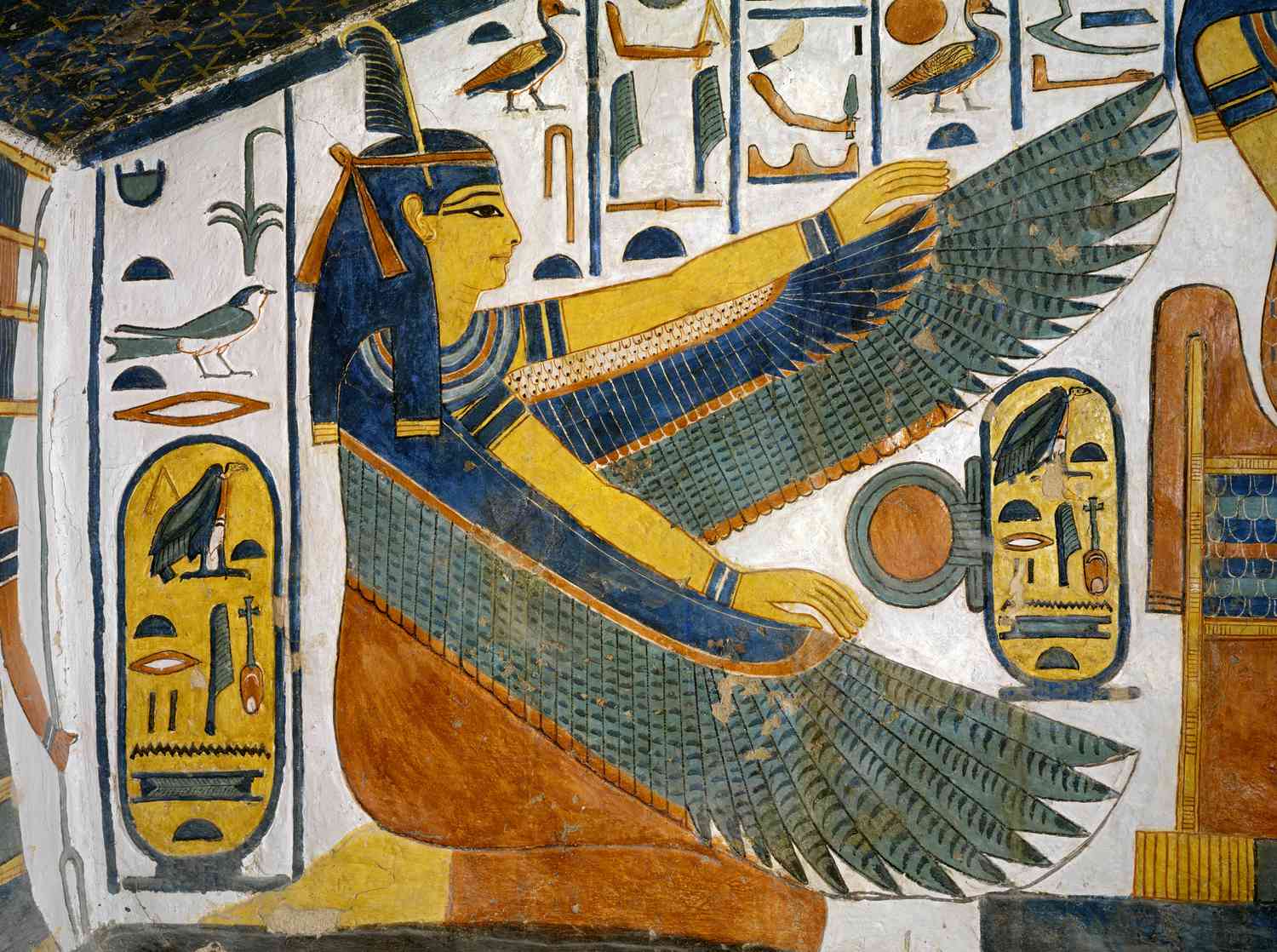
Cosmic Order and Individual Responsibility Ma’at (pronounced may-et) is one of ancient Egypt’s most profound philosophical ideals. This principle governs not only human morality but also the structure of the universe itself. Ancient Egyptians saw Ma’at as the force that upholds the cosmos, guiding celestial and earthly realms alike. From this perspective, the relevance of Ma’at permeates both the cosmic order and the individual’s role within it, emphasizing that balance within the self reflects and supports balance in the universe. Table of Contents: I. Introduction: The Essence of Ma’at This section introduces the concept of Ma’at as a fundamental philosophical ideal in ancient Egypt, encompassing both human morality and the structure of the universe. It highlights the interconnectedness between individual balance and cosmic harmony. II. Ma’at as Cosmic Order This section explores the Egyptian belief in a balanced cosmos constantly threatened by disorder (Isfet). Ma’at is presented as the active force maintaining harmony, similar to concepts like yin and yang but personified as a goddess. It emphasizes that upholding Ma’at requires continuous effort and vigilance from both gods and mortals to ensure the smooth functioning of cosmic cycles. III. Human Responsibility in Upholding Ma’at This section focuses on the individual’s crucial role in sustaining Ma’at. Every thought, action, and intention contributes to either harmony or disharmony in the cosmos. Living in accordance with Ma’at involves embracing truthfulness, compassion, justice, and social responsibility, while rejecting actions that disrupt social and cosmic order. IV. Ma’at as Inner Equilibrium This section delves into the personal dimension of Ma’at, highlighting the importance of inner balance for aligning with the cosmic order. It explains the Egyptian belief in the heart as the seat of emotions and intentions and how a pure heart reflects a life lived in balance. The afterlife judgment scene, where the heart is weighed against the feather of Ma’at, symbolizes the importance of achieving inner harmony for spiritual advancement. V. Ma’at and the Collective Good This section emphasizes the Egyptian understanding of the interconnectedness between individual actions and the welfare of the community and the cosmos. It contrasts the Egyptian focus on collective good with modern individualism, highlighting the belief that every act of kindness or cruelty impacts the overall balance. Maintaining Ma’at is presented as a moral and practical obligation, essential for the flourishing of society and the natural world. VI. Resonance with Modern Life and Psychology This section examines the enduring relevance of Ma’at in the modern world, offering a framework for cultivating balance within ourselves and society. It connects Ma’at to contemporary psychological concepts of inner equilibrium and purpose beyond individual desires. Ma’at’s emphasis on interconnectedness serves as a reminder that individual actions have broader impacts and contribute to collective stability. VII. Ma’at and the Law of Unity of Opposites: Embracing Cosmic Balance This section explores the intersection of Ma’at with the Law of Unity of Opposites, demonstrating how balance arises from the interplay of opposing forces. It reinforces the idea that Ma’at is both a principle and a deity, signifying its crucial role in maintaining order and justice within the universe. The section further explains how the concept of Isfet, or chaos, underscores the importance of actively maintaining Ma’at. VIII. Understanding Ma’at: The Principle and the Goddess This section delves deeper into the dual nature of Ma’at, exploring both its conceptual and divine aspects. It highlights Ma’at’s role as a silent force in times of stability, while also emphasizing its importance as a guiding light during periods of crisis. Ma’at’s connection to Ra, the sun god, solidifies its role as a fundamental force in sustaining life and order within the cosmos. IX. The Law of Unity of Opposites This section examines the Law of Unity of Opposites in relation to Ma’at, demonstrating how seemingly opposing forces are interconnected and essential for achieving balance. It draws parallels with scientific concepts like Einstein’s theory of relativity, further solidifying the idea that harmony arises from the interplay of opposites. The section also emphasizes that tension is necessary for balance, as exemplified by the cyclical relationship between day and night. X. The Cosmic and Individual Relevance of Ma’at This section reiterates the interconnectedness between individual actions and their cosmic consequences, emphasizing the Egyptian belief that living in accordance with Ma’at contributes to universal harmony. It highlights specific actions, such as laziness and greed, that disrupt the flow of Ma’at, while underscoring the importance of cultivating positive qualities like compassion and receptiveness. XI. Ma’at in the Modern World: A Call to Consciousness This concluding section reinforces the timeless relevance of Ma’at as a guiding principle for achieving balance in the modern world. It calls for conscious effort in promoting balance through our daily choices, emphasizing that acts of compassion and integrity contribute to a just and harmonious world. The section leaves the reader with a powerful message: maintaining balance is an ongoing journey requiring constant striving to align with universal principles. XII. The 42 Laws of Ma’at aka The Negative Confessions Ma’at as the Cosmic Order The Egyptians believed that the cosmos was fundamentally balanced, yet it was also in continual danger from disorder, or Isfet. Ma’at stood for the intricate web of relationships between seemingly incompatible elements that kept the universe together. Other spiritual and philosophical traditions that stress duality and interdependence, such as Taoism’s yin and yang, are similar to this cosmic balancing concept. However, what truly set Ma’at apart was the depiction of a goddess who, along with Ra, ensured cosmic stability as an embodiment of its dynamic divine force, rather than just a concept. The Egyptians believed that every cosmic entity—from the sun god Ra’s daily journey across the sky to the Nile’s cyclical flooding—operated within the principles of Ma’at. Without Ma’at, the world would succumb to disorder, disrupting the cosmic cycle. Thus, Ma’at wasn’t merely a passive state of balance; it was an active, ongoing process. Maintaining Ma’at meant continuously striving for harmony, a task that required vigilance, wisdom, and action from both gods and mortals alike. Human …