Home

The True History and Metaphysical Symbolism of Baphomet

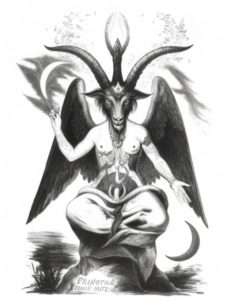
Baphomet is an enigmatic figure associated with the Knights Templar and occultism. But what is the truth behind this legendary emblem and its deeper spiritual meaning? Dive into the origins and symbolism of Baphomet. The Complete History and Spiritual Symbolism of the Baphomet Emblem For centuries, the mysterious figure of Baphomet has intrigued occultists and sparked controversy. But what do we really know about the origins and deeper symbolism of this enigmatic emblem? In this article, we’ll dive into the true history behind Baphomet and uncover its multifaceted metaphysical meanings. Baphomet Baphomet is a symbol associated with occult and mystical traditions, representing balance. Its origin is often linked to the Knights Templar and Gnostics, with some considering it a deity or demon. The French occultist Eliphas Levi created the modern Baphomet. The Knights Templar were accused of worshipping Baphomet during the Inquisition. The symbol is depicted as a winged creature with a goat head. In recent incidents, a Satanic Temple’s Baphomet idol was destroyed, leading to hate crime charges. Baphomet’s influence extends to subcultures, fashion, and music, as seen in the metal band Belphegor’s track “Baphomet.” The symbol remains a mysterious and contradictory figure, influencing various aspects of contemporary culture. Origins of Baphomet The first known reference to Baphomet appeared during the inquisitions of the Knights Templar in the 14th century. Accused of heresy, the Knights were said to have engaged in occult practices and taken vows to worship a figure known as Baphomet. While later interpreted as a devil or demon, it’s unlikely the original Baphomet was ever meant to represent evil. Scholars now believe Baphomet was a symbolic figure used to illustrate occult teachings. Some believe the name Baphomet originated from a corruption of two Greek words, “baphe” and “metis,” which together mean “absorption of knowledge.” Others trace it back to the name “Muhammad,” implying the Crusaders may have encountered this figure during their travels to the now Middle East. The figure of Baphomet is NOT a Christian Devil but rather a symbol of the ancient alchemists depicting Nature and natures God being a combination and balance of the forces, light and darkness, according Manly P. Hall in his book “The Secret Teachings of All Ages.” .Manly P. Hall on Dionysian Masonry Manly P. Hall, a renowned author and lecturer, explored the connections between the Dionysian Mysteries and Freemasonry in his works. Here are some key points: Influence of Dionysian Architects: Hall believed that the Dionysian Architects, a mysterious society, had a significant impact on the development of Freemasonry. He argued that the Dionysiac Architects’ speculative philosophic code and metaphysical doctrines were incorporated into Freemasonry’s symbols and rituals. Checkerboard Floor: Hall noted that the checkerboard floor in modern Masonic lodges is a remnant of the Dionysiac Architects’ tracing board. This suggests a direct link between the two organizations. Ancient Origins: Hall traced the Dionysian Architects’ presence to ancient regions, including Ionia, Syria, Persia, and India. This implies that the society’s influence on Freemasonry has roots in ancient times. Mysteries and Symbolism: The Dionysian Mysteries, centered around the worship of Dionysus, employed symbolical ceremonies and fables to convey moral and philosophical teachings. Hall believed that Freemasonry adopted similar techniques, using allegories and symbolism to convey its own esoteric teachings. Manly P. Hall’s Works: Hall’s book “The Secret Teachings of All Ages” (1928) and his article “The Dionysiac Architects” (reprinted in “The Midnight Freemason’s Blog”) provide valuable insights into his theories on the connection between the Dionysian Mysteries and Freemasonry. Key Quotes “The checkerboard floor upon which the modern Freemasonic lodge stands is the old tracing board of the Dionysiac Architects, and while the modern organization is no longer limited to workmen’s guilds it still preserves in its symbols the metaphysical doctrines of the ancient society of which it is presumably the outgrowth.” – Manly P. Hall, “The Secret Teachings of All Ages” “Aside from the operative aspect of their order, the Dionysiac Architects had a speculative philosophic code which was the foundation of their mystical system.” – Manly P. Hall, “The Dionysiac Architects” Manly P. Hall’s research suggests that the Dionysian Architects, an enigmatic society, played a significant role in shaping Freemasonry’s symbolism, rituals, and philosophical underpinnings. His works provide a fascinating exploration of the connections between ancient mysteries and modern Masonry. With a Caduceus of Mercury in opace of its Phallus, the Goat of Mendes or BAPHOMET whom the Templars were accused of worshipping is a Goat Headed deity, formed of both masculine and feminine principles. One arm points up and one down, bearing the Latin “Solve et Coagula” on them—that is, “flow and ebb.” This is NOT the image of a Christian Devil but a sign of the ancient Alchemists depicting Nature and natures God being a Combination & Balance of Male and Female forces, light and darkness, wetness and dryness. The exact principle of Thoth: As Above So Below” is what is symbolized by BAPHOMET…” The word Baphomet is derived from Greek βαϕή baphe, βάπτω (“I dip”) “immersion” + Mῆτις, Metis “wisdom,” “skill,” or “craft.” Baphomet means “baptism,” or starting into wisdom In Latin, the phrase, TEM OHP AB (Temple omnium hominum abba), which is simply Latin for “father of the temple, universal peace of men.” TEM OHP AB written backwards is where we get the word “Baphomet.” In the book, “The mysteries of magic: a digest of the writings of Eliphas Lévi” by Éliphas Lévi and Arthur Edward Waite, it explains the reason why this name was chosen. “The Baphomets of the Templars, whose names should be spelt kabbalistically backward, is composed of three abbreviations—TEM OHP AB, Temple omnium hominum pads abbas, the father of the temple, universal peace of men.” According to some, it was a gigantic head, according to others, a goat-shaped demon. A sculptured casket uncovered in the ruins of an ancient commanday of the Templars was recognized by antiquaries to be a baphometic figure, conformable in its attributes to our goat of Mendes and the androgyne of Khunrath. It is bearded, …

Dispelling Myths and Revealing the Truth About Melanin

Melanin, a compound derived from the Greek word “meals,” meaning black or dark, is made up of carbon, hydrogen, oxygen, and nitrogen—a natural amino-acid pigment found in living organisms. Melanin is a Compound Melanin cells, particularly melanocytes, give rise to three primary types of melanin: eumelanin, pheomelanin, and neuromelanin. Eumelanin, the darkest form, consists of brown and black eumelanin, while pheomelanin is the lightest, never going darker than maroon. Neuromelanin, found in the brain and central nervous system, plays a crucial role in their optimal function. The Human Body and Melanin’s Role In the human body, melanin not only contributes to pigmentation but is also essential for sustaining life, particularly due to its significance in the central nervous system’s operation. The production of eumelanin or pheomelanin is determined by an individual’s DNA, leading to variations in skin tone and pigmentation. The differences in skin color are attributed not to the quantity of melanin produced but rather to the type of melanin determined by one’s DNA. Skin Pigmentation and Melanin Eumelanin, known as “dark” melanin, contains a higher concentration of dark carbon atoms than pheomelanin, offering advantages in absorbing UV radiation and protecting it from skin damage. Additionally, the increased efficiency in harvesting the sun’s UV rays might potentially provide metabolic advantages for biological processes in the human body. The source of melanin can be traced back to the elements carbon, hydrogen, nitrogen, and oxygen, which originated from exploded stars during the formation of the Universe. Consequently, melanin, being composed of these elements, is likely a product of the Universe, possibly associated with phenomena like Black Holes and dark matter. While melanin holds neutral chemical properties, the significance attributed to it has historical and psychological contexts, particularly concerning the effects of slavery and colonialism. Nonetheless, there is an emerging field exploring the biological, psychological, and spiritual advantages associated with higher levels of eumelanin in humans, potentially impacting areas such as culture, art, and spirituality. What is the Source of Melanin? The assertion that “melanin is carbon and has a molecular structure of six protons, six neutrons, and six electrons, equaling 666, or the mark of the beast,” is debunked here. The information presented demonstrates the inaccuracy of this claim. To verify or disprove such claims, scholarly sources like Google Scholar are invaluable. The value of melanin has been documented; it is worth $500 a gram, significantly more than gold. This refutes the notion that melanin is equivalent to carbon, given that 25 grams of carbon are worth only $234. 666 and Melanin The association with 666, as described in the Bible, does not align with the concept of God creating humankind in his own image. Furthermore, scientific evidence suggests that the first humans traced back to Africa had high levels of melanin in their skin. When analyzing the atomic composition, it’s evident that carbon-12 consists of six protons, six neutrons, and six electrons. However, melanin’s chemical formula (C18H10N2O4) indicates its composition of carbon, hydrogen, nitrogen, and oxygen. Melanin is a chemical compound, while carbon is an element. Moreover, a search on Google Scholar for “melanin is carbon” yielded no matching articles, indicating the absence of scholarly support for this claim. The molecular structure of melanin, still not fully understood, does not align with the known structure of carbon. Is This Blasphemy? Allow us to explain why this is blasphemy. The number 666 refers to  Revelation 13:18, which states: “Here is wisdom.” Let him who has understanding count the number of the beast since it is the number of a man, and his number is six hundred threescore and six. According to Genesis 1:27, God created humans in His likeness, including males and females. “The first humans were Adam and his wife.”In Genesis 3:20, Adam refers to his wife Eve as the mother of all living things. Why would God create two beings in his own image only to give them the mark of the beast? Does that imply that God is the beast? This is the blasphemy we mentioned previously. The most recent common ancestor of all humans is from Africa. Mitochondrial Eve lived approximately 200,000 years ago in East Africa. “Y-chromosomal Adam” was an individual who lived between 200,000 and 300,000 years ago. If God made us in his image and science demonstrates that the early people had high levels of melanin in their skin, it’s easy to see why Atheism is on the rise. Carbon is an Element, Right? Is it accurate that carbon contains six protons (positively charged particles), six neutrons (uncharged particles), and six electrons (negatively charged particles). Okay, let’s see. Go to scholar.google.com. It’s like a hidden, secret area of Google that most people are unaware of. Search for six protons, six neutrons, and six electrons.The first of the 217 results should be titled “The isotopic mass defect: a tool for limiting molecular formulas by accurate mass.” It comes from Analytical and Bioanalytical Chemistry, August 2010, Volume 397, Issue 7, pages 2807-2816. The article states that 12 C is made up of six protons (1.007277 u each), six electrons (0.000548597 u each), and six neutrons (1.008665 u each). The book Natural Kinds by MA Khalidi, – The Oxford Handbook of Philosophy of Science, 2016 says the following on page 411: “An atom of carbon-12, for example, has six protons, six neutrons (each of which consists of three quarks), and (in a nonionized state) six electrons…” Allan B. Cobb tells us on page 18 of his book “The Basics of Nonmetals” “The majority of carbon exists in the form of the isotope carbon-12, or C-12. Carbon-12 is extremely stable. It contains six protons and six neutrons. Carbon-12 accounts for approximately 98.9 percent of total carbon. So, yes, “carbon” contains six protons, six neutrons, and six electrons. Carbon-12, precisely, accounts for 98.9 percent of all carbon. The chemical formula of melanin is C18H10N2O4. A melanin molecule contains 18 carbon atoms, 10 hydrogen atoms, two nitrogen atoms, and four oxygen atoms. Melanin contains carbon, hydrogen, nitrogen, and oxygen.What is …

Exploring the Enigma: The Absence of Ancient Documentation on the Exodus

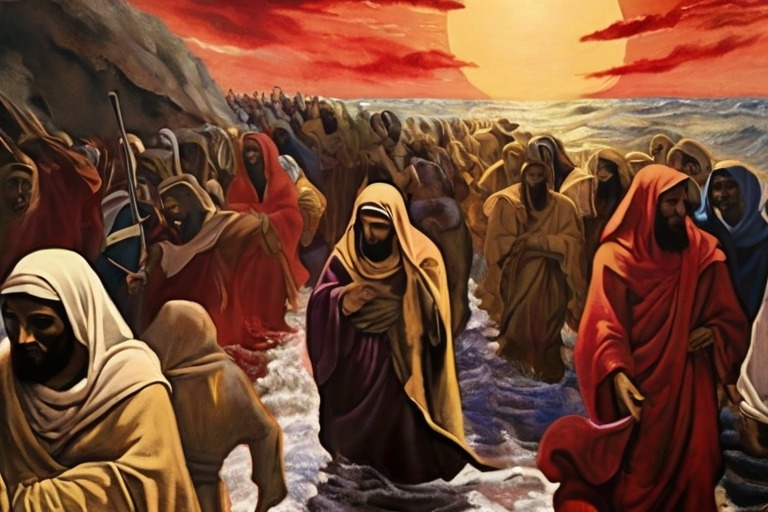
Introduction In dissecting the biblical narrative of the Israelites’ Descent and Great Exodus from Egypt, it becomes imperative to scrutinize historical archives for corroborative evidence within the Egyptian milieu. Silent Annals: The Curious Void The intricate series of events in this story include Joseph’s prophetic abilities, Jacob’s Hebrew family’s journey from Canaan, and the powerful plagues brought by Moses. The deaths of Egypt’s firstborn, including the Pharaoh’s heir, and the Pharaoh’s demise in the Red Sea would logically be meticulously recorded by the knowledgeable scribes tasked with documenting daily life in ancient Egypt. Historical Void Curiously, the annals of the time remain conspicuously silent, bereft of any contemporaneous inscriptions documenting these momentous occurrences. Despite the explicit duty of Egyptian scribes to record pivotal events, a void persists in the historical records about the biblical chronicle of the Israelites’ Descent and the subsequent Great Exodus. This silence prompts a perplexing inquiry into the unspoken history, revealing an intriguing absence of documented evidence. Inscriptions and Discoveries Noteworthy is the discovery of the name “Israel” inscribed on a pharaonic stele, albeit devoid of any connection to Moses or the Exodus. The Merneptah stele, dating around 1219 BC, places the Israelites in Canaan but omits any mention of their prior residence in Egypt or their departure in a monumental Exodus led by Moses. The scientific quest for evidence regarding the Exodus encounters an obstacle, as the official Egyptian records remain resolutely silent on Moses and his followers. Breaking the Silence: Historical Revelations The clandestine suppression of Moses and the Great Exodus from official Egyptian chronicles eventually yielded to the pens of Egyptian historians. Their detailed accounts, emerging from the shadows of deliberate omissions, divulge a rich tapestry of narratives surrounding Moses. Despite an era of suppression, popular traditions endured, venerating Moses as a divine figure. The Macedonian Ptolemaic Dynasty, which succeeded Alexander the Great’s reign in 323 BC, ensured the inclusion of Moses and the Great Exodus in historical narratives. Manetho’s Account: A Closer Look Manetho, the esteemed 3rd-century BC Egyptian priest and historian, recorded Moses as an Egyptian figure, not Hebrew, living during Amenhotep III and Akhenaten’s reigns (1405 to 1367 BC). The Israelite Exodus, according to Manetho, unfolded during the reign of Ramses, succeeding Amenhotep III. Flavius Josephus, the 1st-century AD Jewish historian, preserved fragments of Manetho’s account, shedding light on a complex narrative involving divine visions, lepers, and political upheaval. Clarification and Correction It is crucial to correct Josephus’s assertion that Manetho invented a king named Amenophis; historical scrutiny identifies Amenhotep III as the monarch in question. The veracity of Manetho’s account gains credence, considering the subsequent rise of Amenhotep’s namesake, Amenhotep, son of Habu, to the esteemed position of Minister of all Public Works. Symbolic Impurity: Understanding Manetho’s Perspective Manetho’s portrayal of rebels as “lepers and polluted people” extends beyond literal interpretation, reflecting their perceived impurity due to a rejection of Egyptian religious beliefs. Josephus further expounds on the rebel leader’s laws, emphasizing a renunciation of Egyptian gods and customs. These oral traditions, enduring for centuries, found their written expression during the Macedonian Ptolemaic Dynasty. Parallel Narratives: Akhenaten and Manetho’s Account Intriguingly, Manetho’s account aligns with the historical context of Amenhotep III and his son Akhenaten, who initiated a religious revolution by abandoning traditional polytheism in favor of monotheistic worship centered on the Aten. The parallels between Akhenaten’s actions and Manetho’s narrative suggest a historical basis for the events surrounding Moses and the Exodus. Perspectives: Avaris vs. Rameses Dvergent  While biblical and Manethonian accounts differ on the starting point of the Exodus—Rameses in the Bible versus Avaris in Manetho’s rendition—the latter’s association of Avaris with the Asiatic Hyksos rulers aligns with archaeological findings. Regrettably, modern scholars, influenced by Josephus’s misidentification, have often dismissed Manetho’s account as unhistorical, diverting the quest for evidence away from the historically contextual path. Conclusion: Unraveling the Enigma In conclusion, the enigma of the Exodus persists, intertwined with historical fragments and obscured by divergent narratives. The meticulous examination of ancient records and a nuanced understanding of Manetho’s account beckon us to reevaluate established perspectives, potentially unveiling new dimensions to this enduring mystery.

Pleiades Dreamtime and the 7 Sisters

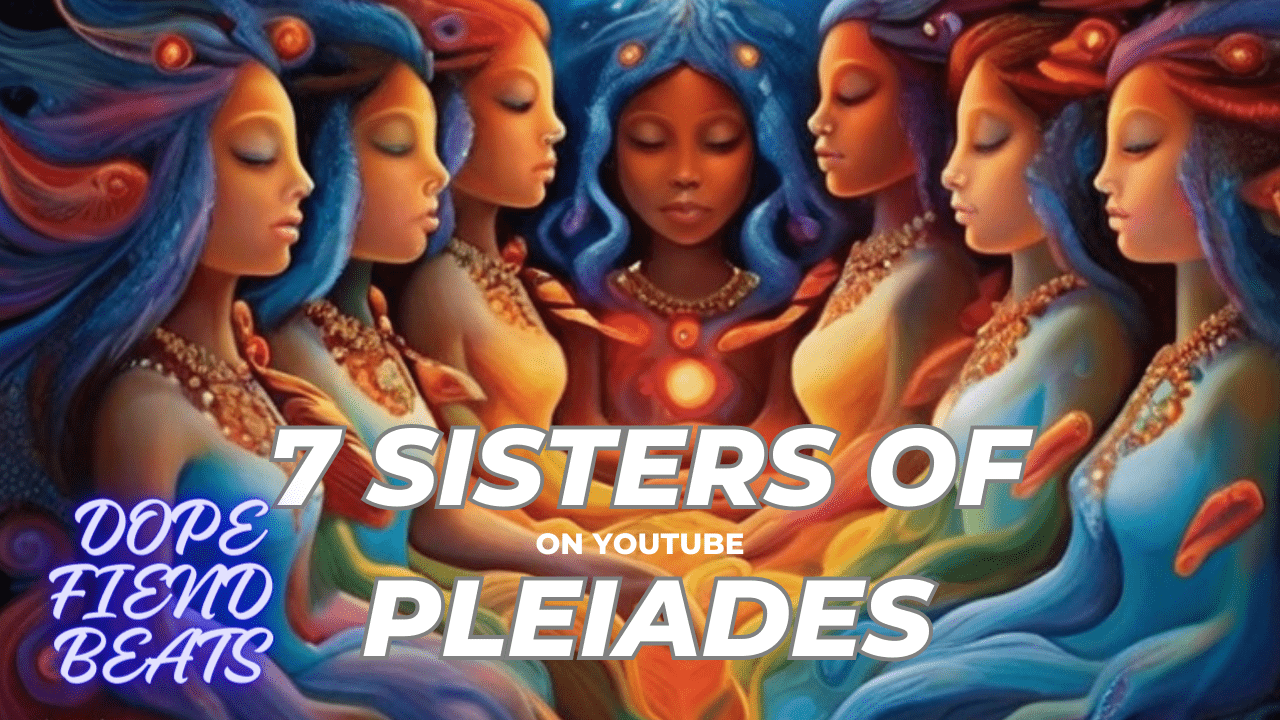
Exploring the Mysteries of an Ancient Myth The narrative surrounding the Seven Sisters, often referred to as Dreamtime, stands as one of the most ancient tales in existence. This global narrative revolves around a man, often depicted as a hunter, pursuing a group of young women, commonly sisters, who, to safeguard themselves, are transformed into celestial bodies. Thanks for reading Steafon’s Substack! Subscribe for free to receive new posts and support my work.     In this article, we will delve into the depths of human history to explore the origins and evolution of this ancient tale. We will uncover intriguing mysteries surrounding the Pleiades, the enigmatic label of the “seven sisters,” and the global resonance of this myth in both Greek and Australian cultures. Join us on this journey as we unravel the secrets of Pleiades Dreamtime and the 7 Sisters. The Pleiades: A Youthful Cluster in the Cosmic Timeline The Pleiades cluster emerges as a relatively youthful assembly of stars, around 125 million years old. While this fact holds astronomical interest, the crucial aspect lies in determining when humans began documenting these celestial formations in their historical records. The earliest written evidence of human awareness of the Pleiades dates back to 2357 BCE in Chinese astronomical literature. Visual representation comes in the form of the Nebra disk, approximately 3,600 years old, discovered in Germany, depicting the Pleiades symbolically. Ancient Egyptian Beliefs and the Pleiades According to ancient Egyptian beliefs, the Pleiades, also known as the Seven Stars, were not solitary luminaries but focal points in a cosmos teeming with inhabited planets and advanced beings. This belief adds a layer of intrigue to the myth surrounding the Pleiades. The Galactic Conflict in the Pleiadian Star Cluster The narrative takes an intriguing turn when we confront a galactic conflict in the Pleiadian star cluster. The war, initially a struggle for planetary dominion, unraveled between the Lyrians and the Sirens, leading to profound consequences. To comprehend the deep-rooted connection between Earth and the Pleiadian star cluster, we must traverse the annals of history. A significant chapter unfolds in ancient Egypt, where the practice of mummification transcends mere preservation. The Great Pyramids and the Celestial Tribute Aligning with the celestial rhythm, the Orion star cluster played a pivotal role in ancient Egyptian architecture. Approximately 2500 years ago, the alignment of the Great Pyramids at Giza with the Orion star cluster marked a celestial tribute. The pyramid, far from a mere monument, emerges as a multifunctional stone computer. Intricately woven into its structure are calculations, hydro-generators, and the generation of static electricity. The Pyramid’s Shafts and Universal Communication Principles Venturing further, the pyramid’s shafts, meticulously aligned with specific stars, were conduits for communication. These shafts, designed to transmit hydrogen frequencies, hint at the Egyptians’ understanding of universal communication principles. The Great Pyramid, a nexus of energy, held the potential to transmit information across the cosmos. Ancient Civilizations: Technology and Spiritual Wisdom As we explore the mysteries of ancient civilizations, it becomes evident that they harnessed technology and spiritual wisdom in unison. The ancient Egyptians, in their pursuit of immortality and communion with higher realms, left behind a legacy that resonates with the fundamental principles of quantum entanglement. The Greek Mythology Connection: Pleiades and Orion These stars, named after characters from Greek mythology, namely the seven daughters of Atlas and Pleione, play a central role in the Greek version of the Seven Sisters myth. Pleione and her daughters, pursued by the colossal hunter Orion, seek refuge in the intervention of Zeus. The divine protection transforms the young women into doves and eventually into stars in the constellation of Taurus, forming the Pleiades. The Captivating Drama of Divine Actions and Mortal Pursuits The narrative takes a captivating turn with the immortalization of Orion, who, placed in the sky, continues to chase the Seven Sisters. Zeus’s assistance, however, comes with consequences, as he becomes entangled in his own affairs with the sisters. This interplay of divine actions and mortal pursuits adds layers to the myth, creating a rich tapestry of celestial drama. The Dreamtime Stories of Australia’s First Nations The global prevalence of stories involving seven sisters extends beyond Greek mythology, reaching the Dreamtime stories of Australia’s first nations. Known as the Meamei, these seven sisters are pursued by the Berai-Berai, young men leaving gifts and vying for their affections. The stories intertwine with rituals, water motifs, and celestial observations, offering a distinct cultural flavor. Exploring the Origins: Shared Ancestry or Coincidence? As we explore the similarities between the Greek and Australian narratives, questions arise about the origins of these stories. Did they stem from a shared ancestry or mere coincidence? While it is difficult to ascertain the exact origins, it is plausible that these stories emerged independently in different cultures, influenced by similar celestial observations and human experiences. Frequently Asked Questions 1. How old is the Pleiades cluster?The Pleiades cluster is approximately 125 million years old. source 2. Why are the Pleiades called the seven sisters when there are only six stars visible?The enigma of the Pleiades being labeled the seven sisters, despite only six stars being visible to most observers, remains a mystery. It is believed that the missing seventh sister may have faded over time or is simply not visible to the naked eye. source 3. How did the myth of the Seven Sisters spread across different cultures?The myth of the Seven Sisters, with its striking similarities, managed to span the globe and find resonance in both Greek and Australian cultures. The spread of this myth can be attributed to various factors, including cultural exchanges, migration, and shared human experiences. source 4. What is the significance of the alignment of the Great Pyramids with the Orion star cluster?Approximately 2500 years ago, the alignment of the Great Pyramids at Giza with the Orion star cluster marked a celestial tribute. This alignment, along with the precision of the equinoxes, showcases the profound astronomical knowledge possessed by the ancient Egyptians. source 5. How did the …

Unraveling America’s Lost Connections to the Ancient World

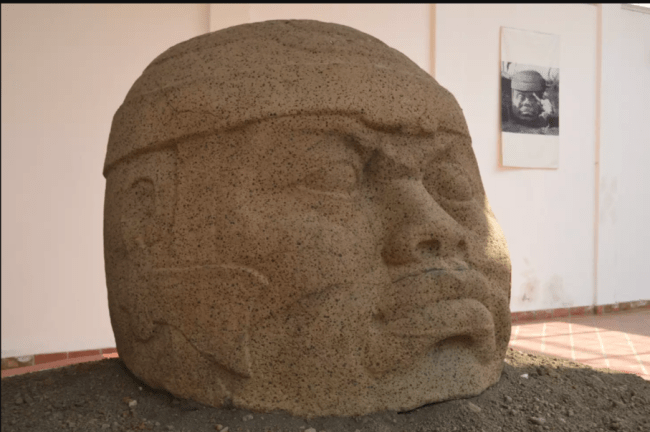
Rediscovering America’s Ancient Settlers: Challenging the Established Paradigms Archaeological discoveries challenge long-held beliefs about the origins and antiquity of America’s earliest civilizations. Compelling evidence suggests advanced cultures like the Olmecs may have flourished in Mesoamerica as early as 1700 BCE. Thanks for reading Steafon’s Substack! Subscribe for free to receive new posts and support my work.     Further revelations point to cultural exchanges between ancient Egypt, South America, and other Old World societies. Sites in Peru, Mexico, and along the mysterious 33rd parallel north also share intriguing similarities worthy of serious study. These findings are revolutionizing our understanding of pre-Columbian history. Pushing Back Dates for Mesoamerican Civilization Radiocarbon dating continually pushes back establishment dates for locales like Mexico’s Xochimilco site to 1700 BCE, contemporaneous with Egypt’s Old Kingdom—a development demanding open-minded evaluation. Recent excavations uncovered Olmec-style artifacts at San Lorenzo and Tres Zapotes from 1500–1000 BCE. At sites like La Venta, radiocarbon tests date habitation to 1200 BCE. This accumulation of chronometric evidence suggests a gradual development, with classic Olmec traditions crystallizing from earlier phases dating to the 2nd millennium BCE. Rather than appearing fully formed around 1200 BCE, their sophisticated art, architecture, and culture evidence much deeper foundations. Transoceanic contact at this stage also cannot be entirely ruled out. Shared iconography between the Olmec, Egyptian, and Indus Valley cultures hints at limited early exchanges warranting investigation, not dismissal. Studied objectively, an emerging picture challenges rigid academic stances. Ancient Connections Between Egypt and South America Fascinating parallels between the two lands include remarkably similar aqueduct systems. The layout of Peru’s famous Nazca Lines also mirrors Egypt’s pyramids at Giza. Iconography presents additional clues: maize, an American staple, unexpectedly appears in Egyptian temples. Likewise, the Olmec worshipped a ram-headed god closely resembling Egypt’s Amun. Proponents suggest an unexplained Afro-American lineage in 5,000-year-old DNA studies hints at maritime contact when Egypt and Peru peaked culturally. While controversial, cumulative evidence merits reconsideration, not scorn. Have you ever pondered the enigma that binds together age-old locations such as Easter Island, Nazca, Ollantaytambo, Paratoari, Tassili n’Ajjer, and the Pyramids of Giza, orchestrating them along the intricate trajectory of a singular grand circle? The revelation of this astonishing correlation among ancient monuments hints at a profound significance that transcends our prior comprehension. Numerous ancient ruins bear witness to the fact that those who erected them not only held a profound reverence for celestial bodies and mathematics but also exhibited remarkable precision. Whether in Egypt or Mexico, it is unequivocal that bygone civilizations engaged in highly intricate celestial calculations, mathematical pursuits, and architectural feats. Tracing Alignments Along the Mysterious 33rd Parallel This narrow global line connects sites renowned for astronomical alignments, advanced engineering, and anomalous experiences. In Mexico, it touches Palenque, one of Mesoamerica’s most impressive cities. Across oceans, it delineates the famed geoglyphs of Peru’s Nazca Lines and Easter Island’s colossal Moai. Moving west, alignments appear at Old World megalithic wonders like England’s Stonehenge. Even further, it intersects ziggurats in ancient Iraq, Lebanon’s monumental Baalbek complex, and renowned cave paintings in India. Crossing the Pacific once more, it terminates its circuit at Palenque—an improbable clustering demanding an explanation. While challenging to prove scientifically, reports consistently describe unusual presences, time distortions, and awakenings for sensitive visitors across this mysterious alignment, meriting an open-minded study combining science, indigenous traditions, and mainstream archaeology. In the serene English countryside near Salisbury, a colossal circle of stones, some weighing up to 50 tons, stands resolute. This Neolithic marvel, known as Stonehenge, sparked the imaginative musings of Swiss author Erich von Däniken, who proposed it as a model of the solar system and an extraterrestrial landing pad. The mystery deepens when considering how these massive stones journeyed hundreds of miles from their original quarry. The true essence of Stonehenge remains elusive, and, contrary to speculations involving aliens, scientists assert that constructing such a structure was feasible with technologies available approximately 5,000 years ago when the initial structures at the site took shape. Recent revelations hint at a celestial connection, with the stones aligning with solstices and eclipses. This suggests that the builders of Stonehenge, though terrestrial in origin, held a celestial fascination, keeping a watchful eye on the heavens above. Documenting Strange Anomalies Along the 33rd At Egypt’s Giza, electromagnetic fluctuations detected inside pyramids altered nearby water in measurable ways. Near Rapa Nui’s eerie Moai, bursts of photons, ions, and variations in the Schumann resonance evidenced natural energies focusing here. In Peru, subtle magnetic and radiation fluctuations were noted above and within Nazca’s iconic lines. Under Mexico’s Palenque, unusual mineral formations are plausibly formed from underground electromagnetic fields. Strange dreams and projected visions of the alignment’s sites were reported at England’s megalithic circle. Associated sites worldwide link subtle energies here with healing or expanded consciousness worthy of objective, interdisciplinary research. Indigenous traditions recall subtle powers along this line, which correlates to some degree with preliminary scientific readings lending credence to a worthy investigation. Retarded would be an outright dismissal of anomalous claims made by sensitive experiments across cultures and eras. Consistency demands an open-minded reevaluation of our ancestors’ sophisticated relationship with subtle terrestrial forces, now poorly understood in today’s paradigm. Further good-faith collaborations between science, native elders, and open-minded outsiders could help illuminate deeper mysteries veiled since antiquity. Rediscovering Early New World Civilizations Academia generally accepts civilized urbanism, monumental architecture, and complex culture emerging around 1200 BCE with Mesoamerica’s mythical Olmecs. However, compelling evidence demands reassessing prevailing views. At Mexico’s Tlapacoya, carbon dating yields astonishingly early habitation levels dated to 1700 BCE, contemporaneous with Egypt’s Old Kingdom. Recent excavations likewise reveal Olmec-style artifacts and occupations across Mesoamerica as far back as 1500 BCE. The accumulating chronometric picture suggests Olmec traditions gradually evolved out of developmental stages at least two millennia before standard academic timelines. Their sophisticated art, infrastructure, and religious symbolism may represent highly evolved forms with much deeper origins in the ancient Americas, which are worthy of serious investigation untainted by prejudice. Early transoceanic contacts also should not be arbitrarily dismissed, …

Exploring the Known World: A Journey Beyond the Ice Wall

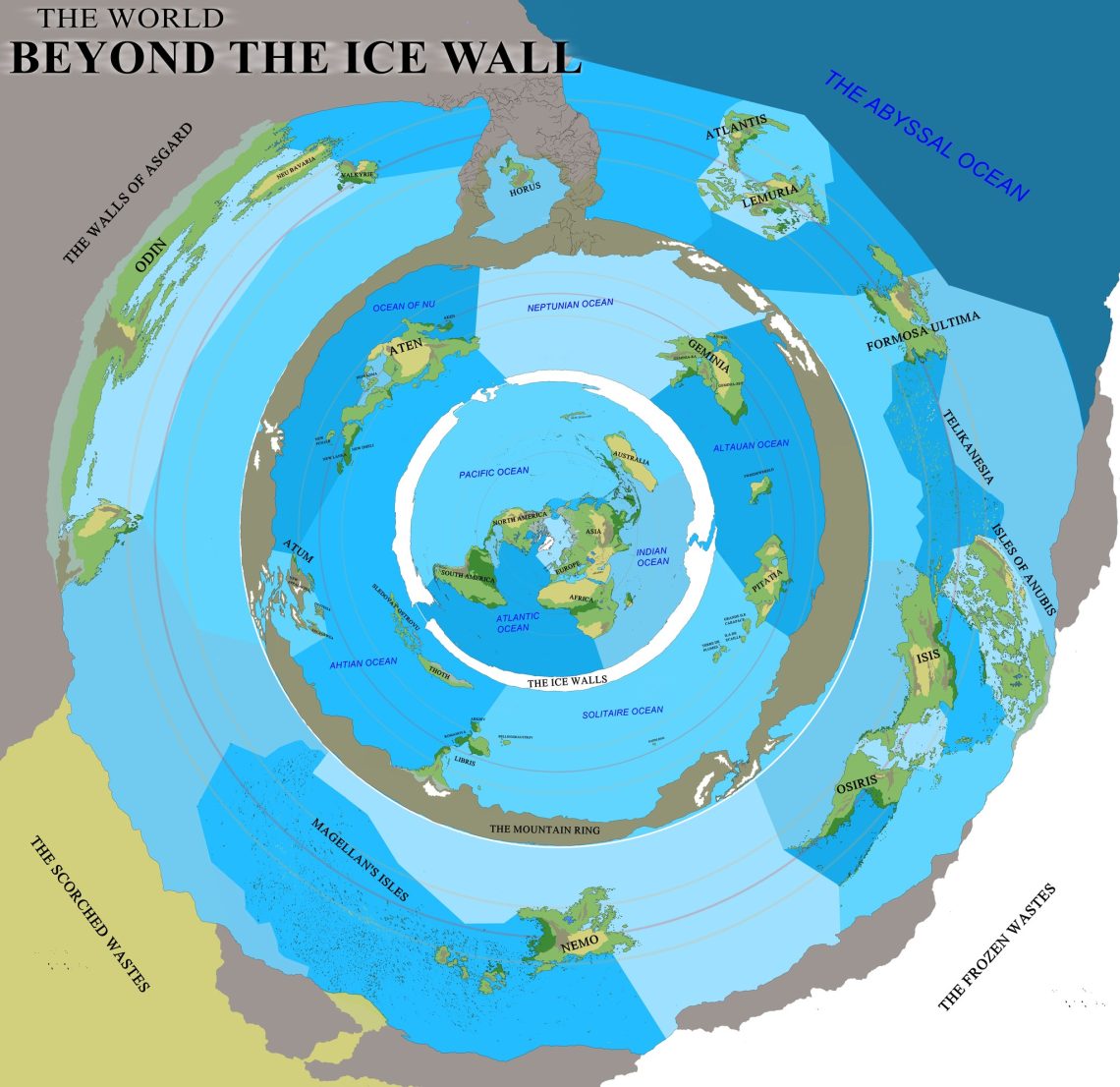
The Known Worlds: Diverse Societies Across Hidden Lands Introduction In the year 1522 CE, the renowned explorer Ferdinand Magellan embarked on a daring mission under the orders of the Spanish crown. His objective? To become the first person to circumnavigate the globe. Thanks for reading Steafon’s Substack! Subscribe for free to receive new posts and support my work.     Little did he know that his voyage would unravel mysteries that would forever alter the collective consciousness of mankind. One of the most significant discoveries made during Magellan’s journey was the existence of a massive ice wall known as the Parede. This enigmatic wall encircled the boundaries of the known world, challenging the existing models and theories of the time. As Magellan and his crew approached the wall, they witnessed extraordinary events that defied explanation. The Known World As Magellan’s vessels ventured closer to the Parede, the very fabric of nature seemed to respond. The oceans churned, the earth trembled, and the skies changed color. Sections of the ice wall cracked and plunged into the waters, creating larger openings that beckoned the crew, and indeed all of humanity, to explore further. This unprecedented encounter with the Parede had far-reaching consequences. The Black Moon Event, during which the moon turned an eerie black color, coincided with the discovery and widening of the gates in the ice wall. In the southern hemisphere, catastrophic tsunamis and indications of volcanic activity sent waves of fear through the world’s cultures. Interpretations of the Black Moon Event varied among different religious groups. Some holy men sought to calm the public, while others exploited the event to sow political instability and religious fervor. Ultimately, the European nobility reached a consensus that the event was a call to action for Christians to expand their horizons and explore the unknown territories beyond the ice wall. On the western islands, the geopolitical landscape in 1522 CE was marked by a complex web of competing Norgri kingdoms. These kingdoms had emerged from the collapse of the Andolont Empire, which had once united their territories. As former subject peoples broke away to form their own nations, the western islands became a fragmented and volatile region. Thoth: The Western Islands Thoth, the land beyond the ice wall, witnessed the arrival of the Yaghan relatives from the southern tip of South America around 6000 BCE. These intrepid humans became the first to sail beyond the ice wall, establishing a new home and gradually expanding their population across the western islands. In the 4th century BCE, a group of Carthaginian explorers, known as the Foshayti, were blown off course and found themselves forced through the Yaghan gate. They survived the treacherous journey and settled in Thoth, where they would coexist with the βae Noongeor people. Over time, the Foshayti would assert their dominance, absorbing, displacing, and even wiping out the local populations. The βae Noongeor, in response, either developed agricultural communities to compete with the Foshayti or remained pastoralists and hunter-gatherers in areas unsuitable for Foshayti agriculture. This clash of cultures shaped the social and political dynamics of Thoth’s western islands. States and countries See also: List of countries in Thoth in 1830 and List of sovereign states and dependent territories in Thoth International organizations See also: Thothian Council, Anti-Andolont Coalition, and Melᶄarthian Union Thoth Area11,573,261 km2 (4,468,461 sq mi)Population814,850,914Population density98.76/km2 (255.8/sq mi)DemonymThothianCountries42 (recognized)LanguagesList of languagesInternet TLDMezfflok Aten: The Continent of Duendes Aten, the continent off the coast of Atenic civilizations. The continent received its first human settlers nearly one million years ago when an Indonesian island was uplifted and floated to its current location. These settlers, known as Duendes, gave rise to four distinct races: Brownies, Goblins, Gnomes, and Leprechauns. The Duendes engaged in gradual settlement and adaptation, eventually introducing agriculture after their interactions with the Xenonesians around 800 BCE. The Xenonesians, primarily trading with the Gnomes and Goblins, brought technology and crops to Aten, influencing the continent’s civilizations. Aten’s diverse landscapes are inhabited by the Brownies in the central deserts and steppes, the Goblins in the dense jungles and rainforests, the Gnomes in the northern temperate regions, and the Leprechauns in the far eastern islands. Each race has its own unique culture, lifestyle, and relationship with the land. Thoth and Terra Infinitta: The World Beyond the Ice Walls <iframe width=”560″ height=”315″ src=” title=”YouTube video player” frameborder=”0″ allow=”accelerometer; autoplay; clipboard-write; encrypted-media; gyroscope; picture-in-picture; web-share” allowfullscreen></iframe> Xenonesia: A Civilization in Turmoil Xenonesia, a land of turmoil and conflict, saw the arrival of the Lapita culture and their settlement. Trade between the Duendeshobbits and the people of Dishipossu and Aten flourished. However, internal conflicts and a cycle of violence-plagued Xenonesian societies led to constant unrest. Piracy became a defining characteristic of the goblins, who inhabited the coastlines and carried out raids on neighboring territories. The Xenonesians struggled to find stability amidst these challenges, with their societies torn apart by internal divisions and external threats. Unknown Lands: Claudio Nicelli Claudio Nocelli is a renowned author who has captivated readers with his intriguing and thought-provoking books. One of his notable works is “The Lands of Mars: 178 Worlds Under the Great Dome“, a fascinating exploration of the mysterious planet Mars and its hidden secrets. This book takes readers on a thrilling journey through 178 different worlds within the vast Martian landscape. Another captivating book by Nocelli is “El Navegante Que Cruzó Las Murallas de Hielo: Mundos detrás de la Antártida” (translated as “The Navigator Who Crossed the Ice Walls: Worlds Beyond the Antarctica”). This book delves into the enigmatic region of Antarctica, unveiling the secrets that lie beyond its icy walls. Readers are taken on an extraordinary adventure as they discover new worlds hidden within the depths of Antarctica. One of Nocelli’s most popular works is “The Navigator Who Crossed the Ice Walls: Worlds Beyond the Antarctica”. This thrilling book has gained widespread acclaim for its gripping narrative and imaginative storytelling. It invites readers to explore the unexplored realms of Antarctica and encounter extraordinary worlds that exist beyond the boundaries of our known reality. Nocelli’s books have garnered significant attention …