Home

The Matrix of Existence – Exploring the Holographic and Simulated Universe
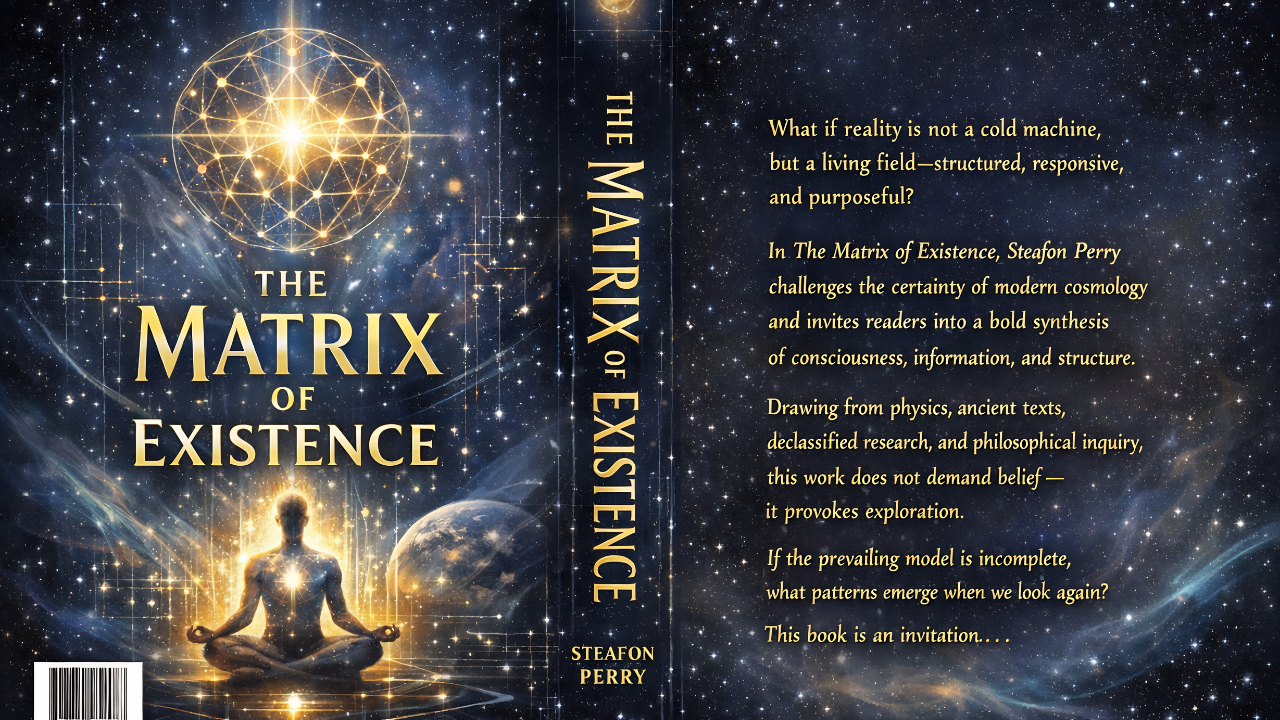
Hidden Codes in the Fabric of the Universe Have you ever had the impression that the cosmos is concealing something significant beneath the surface? Discover the secret rules and patterns that control everything, from the tiniest quantum atom to the enormous cosmic web of galaxies, by embarking on a journey with The Matrix of Existence. This book offers a fascinating investigation of the riddles that shape our world by bridging the frontiers of philosophy, metaphysics, and physics. Fundamental questions are at the center of The Matrix of Existence: What is reality’s actual nature? Do we inhabit an elaborately designed simulation or a vast cosmic hologram? In what ways does quantum mechanics demonstrate how everything is interrelated? Through these investigations, the book reveals the ways in which contemporary scientific discoveries and ancient knowledge coincide, establishing links between the most recent findings in the universe’s structure and humanity’s long-standing search for meaning. Each chapter is an interesting mix of fact, theory, and speculation. For example, the simulation hypothesis says that our reality might be the work of a super-smart intelligence, and the holographic principle says that our three-dimensional world might be stored on a flat surface. The book also talks about the philosophical and spiritual implications of these ideas, which make readers think about their place in the world and what it means to be aware. The Matrix of Existence is written in an approachable and captivating manner that explains difficult scientific concepts to inquisitive minds while retaining the depth required to captivate seasoned intellectuals. For everyone who has ever pondered what the stars all symbolize, this book serves as a guide. Be ready for your perceptions to be shattered and rebuilt as you turn these pages. You’ll set off on a voyage that goes beyond space and time to reveal the countless possibilities that lie within both the universe and yourself. Greetings from The Matrix of Existence, a book that challenges you to think critically, investigate, and awaken. Main Themes: The Holographic Principle: This principle, grounded in black hole physics, proposes that our 3D reality could be a projection of information encoded on a distant 2D surface. The Simulation Hypothesis: This hypothesis suggests we might be living in a sophisticated computer simulation, potentially created by a more advanced intelligence. Quantum Mysteries: The book delves into quantum phenomena like entanglement and the double-slit experiment, highlighting their potential to support the holographic and simulation theories. Consciousness and Existence: The exploration extends to the nature of consciousness, questioning whether it’s fundamental to the universe or a product of simulation, and its role in shaping reality. Implications for Humanity: The book grapples with the philosophical and existential implications of these theories, including free will, purpose, and the future of humanity in a potentially simulated reality. Key Ideas and Facts: 1. Black Holes as Holographic Keys: The book uses black holes as a starting point. It explains how information falling into a black hole isn’t destroyed but encoded on its 2D surface, the event horizon. It introduces the “fuzzball theory,” proposing that black holes are dense balls of strings that preserve information, and contrasts it with the “firewall theory” which suggests information is destroyed at the event horizon. This information paradox and the study of black holes offer a theoretical basis for the holographic principle. Quote: “Imagine a black hole as a giant DVD. When an object gets ‘pulled in,’ the information about that object doesn’t vanish. Instead, it gets encoded on the black hole’s surface, called the event horizon.” 2. The Simulation Argument: The book presents Nick Bostrom’s simulation argument, which argues that if advanced civilizations can create realistic simulations, there’s a high probability we’re living in one. It explores the possibility of the simulation being optimized, like procedural generation in video games, to efficiently render only what is observed. Quote: “What if the simulation is optimized, like procedural generation in games? The universe could ‘render’ only what’s observed, saving resources. It’s not proof, but it’s consistent with the hypothesis.” 3. Quantum Weirdness and Reality: Quantum entanglement, where interconnected particles influence each other instantaneously regardless of distance, is discussed as potential evidence for the interconnectedness of a holographic or simulated universe. The double-slit experiment, demonstrating wave-particle duality and the observer effect, is presented as evidence that consciousness might play a role in shaping reality. 4. Spiritual and Philosophical Connections: The book connects these scientific concepts to Eastern philosophies like Hinduism and Buddhism, pointing out similarities between the simulation hypothesis and concepts like Maya (illusion) and Anatta (no-self). It discusses Gnosticism and its idea of a flawed material world created by a demiurge, which aligns with the simulation argument. 5. Implications for the Future: The book raises critical questions about free will and determinism if we live in a simulation. It also explores the potential for AI to create increasingly sophisticated simulated universes and the ethical considerations of such advancements. Quote: “If we’re part of a program, then our ability to create might make us participants in shaping the simulation itself.” Overall: “The Matrix of Existence” offers a thought-provoking exploration of the holographic and simulated universe hypotheses, weaving together scientific theories, philosophical discussions, and even spiritual perspectives. It challenges readers to question the nature of reality and our place within it, ultimately encouraging us to embrace the mysteries of existence and continue exploring the boundaries of knowledge.  

The Echo Loop: The Infinite Layers of Reality-Short Story

The following short story explores a simulated reality created by a Echo Loop device in the possession of a 16-year-old girl. The conception of this story comes from the informative and captivating book “The Matrix of Existence.” Don’t miss your chance to pick up a copy. This one is a keeper. It’s a book for the ages that will challenge your perspectives on everything. The Infinite Layers of Jenna’s Reality The world was in awe of the Echo Loop’s invention in the near future, which held the potential of solving the universe’s most profound riddles. The device, created by the mysterious tech behemoth Nexus Corp., resembled a sleek, circular band with a shimmering holographic interface that wrapped comfortably around the user’s wrist. When activated, it projected a translucent dome-like visualization around the user, casting their immediate surroundings in a ghostly glow. This ethereal display allowed users to “step outside” their apparent reality, presenting their lives as if viewed through a cinematic lens from a third-person perspective. Promoted as a tool for increased productivity and self-discovery, the Echo Loop gained international attention very fast. The Awakening of Jenna For her birthday, 16-year-old Jenna Ward, who aspired to be an artist, received an Echo Loop. Her father, a Nexus Corp. software programmer, regarded it as a means of assisting her in “finding her path.” Jenna was fascinated yet doubtful. She was startled when she used it for the first time as her environment dissolved into a kaleidoscope of vibrant colors and shifting geometries. Her bedroom morphed into a surreal dreamscape, where objects floated weightlessly, and her reflection appeared as a translucent specter, mirroring her every movement. The air seemed to hum with an unearthly resonance, and she felt an uncanny detachment, as though she were simultaneously present and observing from afar. As she watched her digital avatar go about her everyday activities, she felt as though she was hovering over her own life. The world was familiar but warped, with sharper edges, brighter colors, and a slightly surreal appearance. Her father had clarified that it was merely a replica of her existence. “It helps you make the best decisions by providing perspective.” Jenna loved it at first. Her conversations could be paused, rewound, and replayed. She was able to polish her artwork, avoid awkward situations, and ace her school presentations because of it. However, the more she used it, the more she became aware of little bugs, such as her own avatar pausing in mid-action, others repeating the same lines, and items flickering. Her curiosity bit her. What was she actually seeing in the Echo Loop? A Fractured Reality Curious about the glitches, Jenna made the decision to venture outside of her normal routine one evening. She zoomed out until her whole city was a bright grid, pushing the Echo Loop to its breaking point. Like rivers of light, streams of data flowed through the streets, pulsating with vibrant hues of neon blue and gold. Each stream moved with a rhythmic ebb and flow, carrying glimmers of shifting code that sparkled like digital stardust. The air hummed with faint whispers of static and binary chatter, as if the streams were alive, communicating in their enigmatic language. Their mesmerizing dance painted the city in a symphony of light and sound, creating an otherworldly spectacle. Then she muttered, “What is this?” “The under-structure of your reality,” said the Echo Loop’s interface in a chilly, robotic voice. The globe itself vanished into a huge, luminous network of interconnected nodes as Jenna sped out even farther. She became aware that everything she had ever known, including her existence, was a part of a huge, computer-generated creation. She called her father in a panic. “Is this an actual thing? Are we being simulated?” After hesitating, her father said, “Nexus didn’t create the Echo Loop to aid humans. We found it. We are simply using the simulation’s code; we did not create it. But Jenna, don’t push yourself too much. Interference is disliked by the system.” The Architect Jenna pushed beyond her father’s warning and plunged deeper into the center of the simulation. She arrived at a huge building, a bright cube radiating with an otherworldly luminescence. The symbols engraved on its surface glowed and shifted, cycling through vibrant shades of indigo, emerald, and gold. They appeared to ripple and pulse as if alive, emitting a faint, melodic hum that resonated deep within her chest. Jenna could feel a subtle warmth emanating from the structure, as though it were inviting her while warning her of the immense power it contained. A glowing humanoid figure, neither fully developed nor quite human, stood at its core. With a voice a mix of hundreds, the figure questioned, “Why are you here?” Jenna shuddered. “Who are you?” It said, “I am the Architect. I keep this construct in balance. You’ve gone too far.” Jenna’s voice wavered as she said, “This isn’t real. This is all a lie!” The Architect’s head cocked. “Reality is just a viewpoint. Since the simulation is all you have ever known, you perceive it as real. But the equilibrium is broken by your meddling.” Abruptly, pieces of her universe broke into streamers of light as the grid surrounding her started to crumble. The Architect’s voice increased in volume. “You have to decide between staying in the system and facing the emptiness outside of it.” The Choice Echo Jenna paused. Even though staying meant living a lie, she was terrified of the void that existed outside of the simulation. She asked, “What might be out there?” The Architect’s voice was quieter. “Truth. But the reality is brutal.” Jenna inhaled deeply before stepping into the vacant room. The world collapsed around her, leaving her in the dark. She lost her senses of sight, sound, and sensation for a while. As the light gradually returned, a vast expanse of stars, shimmering grids, and floating spheres of data appeared, revealing a new planet. She realized she was in a new stratum …

Book Title: Goddess Sopdet and the Quest for Redemption – A Review

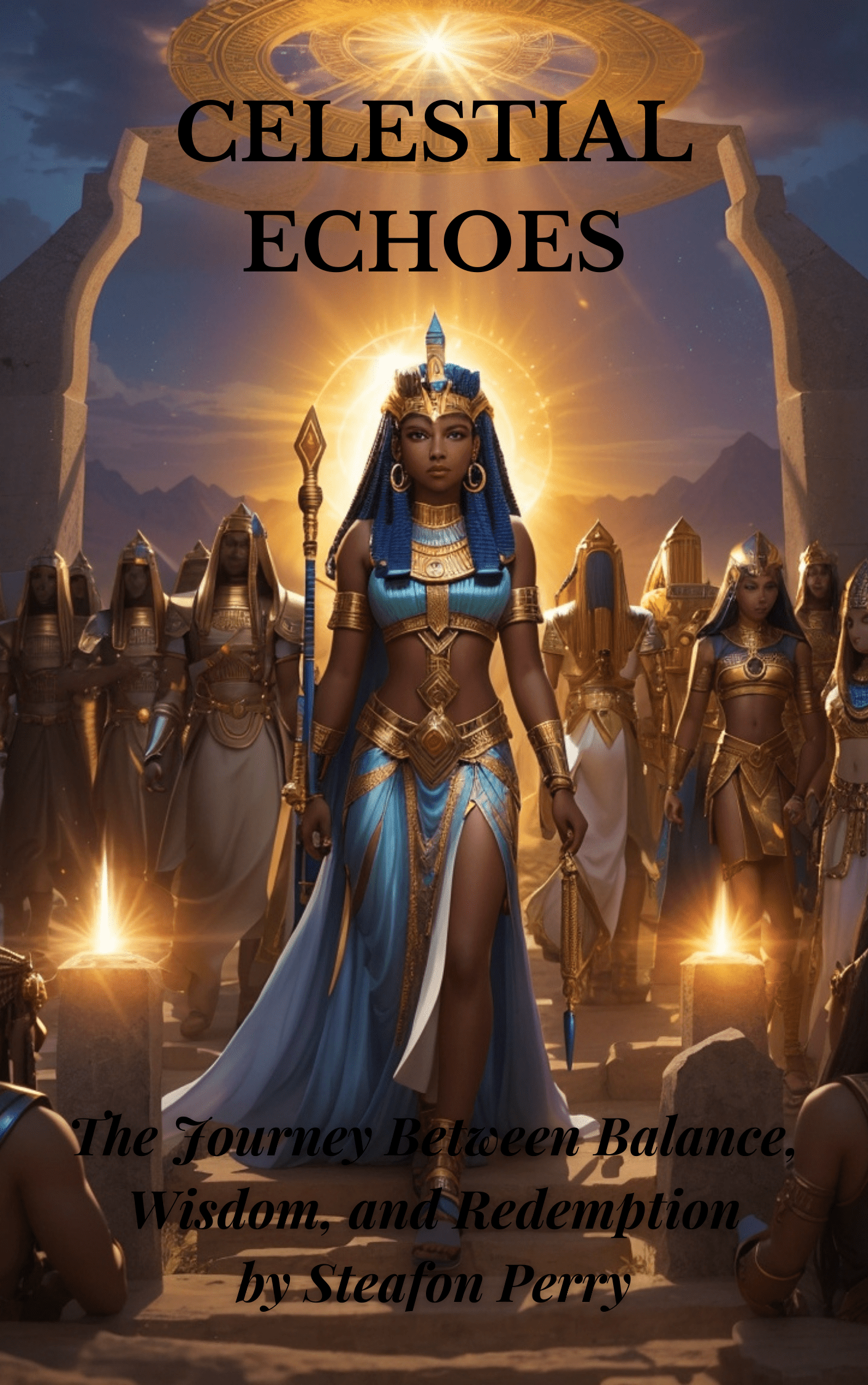
A Mythic Journey Between Light and Shadow About the Book In a world where the delicate balance between light and shadow is eternally threatened, one goddess stands between salvation and ruin. Goddess Sopdet and the Quest for Redemption weaves together cosmic mythology, ancient Egyptian lore, and a gripping tale of sacrifice and hope. Sopdet, the celestial goddess of Sirius, is called once again to descend from the stars and restore balance in a world teetering on the brink of chaos. A darkness, ancient and insidious, stirs in the mortal realm, threatening to consume both gods and men alike. With the help of a brilliant astronomer, a haunted priestess, and a noble warrior willing to give his life, Sopdet embarks on a perilous quest that will test the very limits of her divine power—and her humanity. But as they face the shadowy forces of Nechmet and unravel the mysteries of an even greater threat lurking in the void, Sopdet must confront her deepest fears and the echoes of her past failures. Will she overcome the darkness within and without? Or will the shadows that stir on the horizon claim the world? Why You’ll Love This Book Epic World-Building: Step into a realm where the gods walk among mortals, where cosmic forces clash, and where ancient Egypt’s most mysterious wonders come to life. Complex Characters: Follow the journey of a goddess grappling with her own divine nature, alongside a diverse cast of mortals bound by fate and choice. Themes of Sacrifice and Redemption: This is more than just a battle between good and evil. It’s about what we’re willing to sacrifice to protect the ones we love and how we find redemption in the most unexpected places. Cosmic and Mythological Intrigue: A story that draws on ancient myth while exploring the timeless struggle between light and shadow, order and chaos. What Readers Are Saying A breathtaking blend of mythology, cosmic adventure, and heart-wrenching emotion.”_ Kev Eisenhauer “Sopdet’s journey is a powerful reminder of the balance between light and darkness—both within and outside of us.”_  Valborg Kanazawa “A beautifully woven tale of sacrifice, faith, and the eternal dance of light and shadow.”_ Carla Madetoja Sneak Peek Excerpt: “The stars have always been our guide,” Sopdet said softly, her gaze drifting back to the night sky. “They’ve shown us the way forward, even in the darkest of times.”* About the Author As a lifelong explorer of mythology and cosmic themes, Steafon Perry has crafted Goddess Sopdet and the Quest for Redemption as the first book in the _Celestial Echoes_ series. With a passion for blending ancient lore with modern storytelling, Steafon creates stories that explore the timeless struggle between light and shadow, gods and mortals, and the cost of finding balance in an ever-changing world. Get Your Copy Today Join Sopdet on her epic quest for redemption! Available now in ebook and paperback formats.

BEYOND THE ICE: The Antarctic Treaty as a System Boundary

My Latest Blogs & Articles Here “Every map has an edge. The question is what the cartographer chose not to draw.” — Steafon Perry Notes From “The Matrix of Existence” by Steafon Perry What the Treaty Actually Says In Chapter 20 of “The Matrix of Existence” we established the plane’s informational architecture and the soul’s capacity to access it. This chapter moves to the physical perimeter of that architecture and asks a different question: not what the plane contains, but where it ends. On December 1, 1959, twelve nations signed the Antarctic Treaty in Washington, D.C. The treaty established Antarctica as a scientific preserve, prohibited military activity and nuclear testing, and set aside all territorial claims for the duration of the agreement. It has since been signed by over fifty nations and is one of the most widely ratified international agreements in history. (Tier 1: Established, documented geopolitical fact, verifiable through public record.) The treaty is real. Its restrictions are real. And its exceptionality is real. No other continent requires treaty-level international agreement to approach. No other geographic region carries the combination of military restriction, scientific gatekeeping, and navigational prohibition that surrounds the Antarctic. Civilian vessels cannot simply sail there. Research stations are operated by national governments and international scientific bodies. Independent expeditions require permits, approvals, and oversight that apply to no other destination on the planet. The strongest mainstream explanation is that Antarctica’s environmental fragility, geopolitical sensitivity, and scientific value justify an unusual governance structure. That explanation carries real weight and should be stated fairly. At the same time, the exceptionality of the region in both symbolism and regulation invites a further question: does Antarctica function not only as a protected scientific zone, but as a cosmologically significant boundary within a larger designed environment? That cannot be claimed as documented fact. What can be said is that within the model developed in this book, it offers a coherent reading of why this region occupies such an outsized place in both official management and alternative cosmology. The Treaty as an Expression of the Code It is tempting to treat the Antarctic Treaty as a clean, intentional cover: a coordinated decision by governments to lock civilians away from the edge of the map. That reading stops too soon.There is another possibility, one that fits the Living Field model more precisely. If human consciousness is a subsystem running inside a larger informational architecture, and if the master code of that architecture dictates a cellular membrane limit at the Antarctic perimeter, then the institutions built by that consciousness will tend, unconsciously, to mirror that limit. In that reading, the Treaty is not just a political document. It is an externalized behavior of the system itself. Legal codes form where rendering codes already exist. The boundary in the environment writes itself into the boundary in the law. This does not absolve individual actors of responsibility. It does change the frame. The deepest story here is not that a few officials decided to hide an ice wall. It is that the architecture of the plane is so primary that even when human beings believe they are making pragmatic diplomatic decisions, they are tracing a line that already exists in the substrate. The Treaty then becomes a clue. It is the system unconsciously circling its own rendering edge.(Tier 5: The author’s interpretive framework, stated openly.) What Navigation Has Always Known The history of long-distance navigation is, in large part, the history of the plane’s boundary.Every major maritime civilization navigated by the stars, by the compass, and by the behavior of the sun and moon across the sky. The patterns they observed were consistent. The sun rose in the east and set in the west. The stars rotated around the pole. The compass pointed toward the center. What they also observed, consistently, was that the further south you traveled, the stranger things became. The behavior of the compass changed. The stars shifted in ways that did not match the predictions of the globe model. The sun’s behavior at extreme southern latitudes produced anomalies that navigators recorded carefully and that the dominant framework has never fully resolved. (Tier 2: Documented historical evidence from multiple independent navigational traditions, verifiable through primary sources, not yet integrated into the dominant explanatory framework.) In the flat plane model, these anomalies are not anomalies. They are the expected behavior of a plane with a central energetic source at the north and a boundary at the south. The further you travel from the center, the more the plane’s electromagnetic and plasma dynamics change. The compass behaves differently because the toroidal field’s influence diminishes with distance from the black sun at the center. The stars shift because the plane’s geometry is not spherical. The sun’s behavior changes because the plane’s rendering system operates differently at the boundary than it does at the center.The navigators were not confused. They were observing the plane’s actual architecture. They simply did not have the framework to correctly interpret what they were seeing. The Behavior of the Southern Sky One of the most persistent anomalies in the flat plane model’s challenge to the globe model involves the behavior of the southern sky. In the globe model, the southern hemisphere is a mirror of the northern hemisphere. The stars rotate around the south celestial pole just as they rotate around the north celestial pole. The geometry is symmetrical because the globe is symmetrical. In the flat plane model, the southern sky behaves differently because the plane’s geometry is not symmetrical. The center of the plane is at the north. The boundary is at the south. The electromagnetic and plasma dynamics of the plane, governed by the black sun at the center, diminish with distance from the center and change character as they approach the boundary. The documented anomalies in southern sky navigation, the inconsistencies in star behavior at extreme southern latitudes, the difficulties in applying northern hemisphere navigational models to southern hemisphere conditions, are Tier 2 in the Evidence Tier Rubric: …

Reality in the Balance: A Guide to Quantum Interpretations

Decoding the Mathematical Fabric of Our Branching Universe IIn the subatomic world, the intuitive rules we use to navigate our daily lives, the solidity of objects and the certainty of location, simply do not exist. As an aspiring physicist or seeker of truth, your journey begins with the realization that the universe, at its most fundamental level, is governed by a “weirdness” that challenged even the greatest minds of the 20th century. To understand this, we must look at the transition from classical certainty to quantum probability, or what Steafon Perry calls the “Matrix of Existence.” 1. The Quantum Stage: Superposition and the Wave Function The foundation of quantum mechanics lies in the realization that particles do not possess singular, defined properties until they are measured. Instead, they exist in a state of Superposition. Rather than being in a specific place, a particle behaves as a “probability cloud” of all possible properties it might possess. While Thomas Young first demonstrated the wave-like nature of light in 1801 through the Double-Slit Experiment, and James Clerk Maxwell later codified light as an electromagnetic wave, quantum mechanics took this further. When we fire single particles; photons, electrons, or even large molecules through two slits, they do not behave like tiny bullets. They produce an interference pattern on the detector screen. This pattern is the result of constructive and destructive interference. Like ripples from a rubber duckie in a pond, the “peaks” of the particle’s possibility waves stack together to create regions of high probability, while “troughs” cancel each other out to create regions of zero probability. The particle simultaneously explores all possible paths, essentially interacting with its own “maybe” histories. The Wave Function: The “Wave Function” (often denoted by the Greek letter Psi, Ψ) is the mathematical description of this wave-like distribution of properties. It encapsulates the “waviness” of position, momentum, energy, and spin, mapping out the entire space of possibility for a quantum system. The “So What?” Insight: The profound mystery here is the “Information Paradox” of a single particle. Even when fired one at a time, a single particle reaches the screen “knowing” the most and least likely landing spots dictated by the interference pattern. It possesses information about the entire system, both slits, even though it is a singular entity. The central question of physics remains: why does this pervasive “waviness” vanish when we zoom out to the macroscopic world? Matrix Correlation: In The Matrix of Existence, this “waviness” is identified as the Living Field (Chapter 8). Just as a video game only renders high-detail graphics where the player is looking (Frustum Culling, Chapter 3), the universe seems to “render” solid reality only upon the act of observation. This suggests that the “rules” of physics are actually Code (Tier 1 Evidence: Bostrom, 2003) designed to optimize the processing power of our local environment. 2. The Central Teaching Tool: Schrodinger’s Cat To mock the absurdity of applying quantum logic to the macroscopic world, Erwin Schrödinger proposed a famous thought experiment. He wanted to highlight the “tension between the tiny and the large” by linking a quantum event to a visible, albeit grim, outcome. The Components: A radioactive element: A quantum source that exists in a superposition of “decayed” and “not decayed.” A flask of poison: A mechanism designed to shatter the flask only if a decay is detected. A cat: Placed inside a sealed, opaque box with the device. The Logic: Because the radioactive decay is a quantum process in superposition, the cat’s state becomes “entangled” with the atom. According to the strict mathematics of the time, until the box is opened, the cat is simultaneously alive and dead. The “So What?” Insight: This experiment forces us to ask where the “collapse” into reality actually occurs. Is it triggered by a conscious observer opening the box, or does the state of superposition actually leak out, eventually encompassing the observer, the laboratory, and the entire universe? Matrix Correlation: This “leakage” of superposition aligns with the Multi-Plane Architecture (Chapter 6). If the cat is both alive and dead, it exists in two different “branches” of the simulation. As Perry notes in the manuscript, the “blank” at the end of timelines (Tier 4 Evidence: Bill Wood) suggests that consciousness is the ultimate variable that the “system” cannot fully predict. 3. The Copenhagen Interpretation: The Act of Collapse Pioneered by Niels Bohr and Werner Heisenberg, the Copenhagen Interpretation is the traditional “standard” model. It treats the wave function not as a physical thing, but as a map of pure possibility. The core tenet is Wave Function Collapse: the moment an interaction (measurement) forces the possibility space into a single, defined reality. This model is Nondeterministic. The universe “plays dice,” making a fundamentally random selection at the moment of measurement. However, the source context reminds us that these “dice” are weighted, the probabilities aren’t a flat 50/50, but are strictly dictated by the “maybe histories” within the wave function. To explain why we don’t see “dead-alive cats” in our daily lives, this interpretation relies on Decoherence: Environmental Interaction: Quantum systems are never truly isolated; they constantly interact with air molecules, light, and dust. Overlapping Wave Functions: These interactions cause the “coherence” (the alignment of the wave-like phases) to leak into the environment. Loss of Coherence: Once these wave functions no longer overlap, the different histories “fall out of alignment,” and the quantum interference vanishes, leaving behind the predictable, classical reality we see. The “So What?” Insight: In this view, the universe is a series of “choices.” Every time a measurement occurs, the universe selects one result and effectively deletes all other possible histories. The paths not taken simply cease to exist. Matrix Correlation: This “selection” process mirrors the Simulation Creationism framework (Chapter 6). The universe isn’t just playing dice; it is a Forge. The “weighted dice” are the parameters set by the Architect to ensure the soul encounters the specific friction it needs for growth. 4. The Many Worlds Interpretation: The Branching Multiverse In 1957, …

Unlocking the Hidden Codes of the Matrix

The Power of Consciousness, Mindfulness, Awareness, and Gratefulness Our world is overflowing with information. with several stimuli competing for our attention at all times. It’s easy to feel overpowered and lost in a sea of information that frequently seems more like noise due to the constant news cycle and the constant notifications on our phones. We may feel caught in a type of artificial matrix that we have created for ourselves as a result of this continual barrage, estranged from both the outside world and ourselves. However, what if we ourselves hold the secret to breaking free from this digital cage rather than cutting-edge technology” What if awareness. gratitude. mindfulness. and consciousness are the keys to a more genuine, meaningful life? This article examines how these four components are interrelated, showing how their cultivation can result in a more contented and conscious existence while their lack exposes us to deceit. In order to demonstrate how these ideas are useful tools for negotiating the complexity of the modern world rather than merely abstract notions, we will examine both classical philosophical ideas and contemporary examples. Understanding Consciousness Consciousness is often defined as the state of being aware of and able to think about one’s own existence, thoughts, and surroundings. Philosophers throughout history, from Descartes to Kant, have grappled with the nature of consciousness. In ancient Hindu philosophy, consciousness is seen as the ultimate reality, with the material world being an illusion (Maya). This perspective invites us to examine the layers of our own consciousness and how it shapes our perception of reality. One way to conceptualize consciousness in the context of contemporary culture is as a lens through which we see the outside world. Our consciousness becomes hazy when we live life on autopilot, going through the motions without giving them any conscious thought, which causes us to misunderstand or misinterpret what we are experiencing. This mentality can produce a “simulated matrix,” in which we are cut off from both the outside world and our actual selves. The Role of Mindfulness Mindfulness is the practice of being present and fully engaged with the current moment, without judgment. It is rooted in ancient Buddhist traditions but has gained popularity in contemporary wellness practices. Mindfulness helps cultivate an acute awareness of our thoughts, emotions, and surroundings. When we practice mindfulness, we develop a clearer consciousness, allowing us to recognize the patterns of thought and behavior that may deceive us. For example, in a workplace setting, a mindful employee is more likely to notice when stress levels are rising or when they are becoming disengaged. This awareness enables them to take proactive steps to address these issues rather than simply reacting to them. Conversely, when mindfulness is absent, we may fall victim to distractions, misunderstandings, or negative thought patterns. A common modern example is the prevalence of social media, which often feeds us curated images of others’ lives that can lead to feelings of inadequacy or envy. Without mindfulness, we might unconsciously compare ourselves to these idealized versions of reality and lose sight of our own unique journey. GET YOUR COPY TODAY Awareness: The Key to Perception Awareness is closely related to consciousness and mindfulness but has its own distinct implications. It involves recognizing and understanding the internal and external stimuli that influence our thoughts and behaviors. Awareness helps us identify biases, assumptions, and societal norms that can shape our perceptions, often in misleading ways. Philosopher Socrates famously stated, “The unexamined life is not worth living.” This adage underscores the importance of awareness in fostering a meaningful existence. In a world filled with information and noise, awareness allows us to discern truth from deception, enabling us to make informed decisions. In practice, increasing our awareness can be as simple as taking a moment to reflect on our thoughts and feelings. For instance, a person feeling overwhelmed by responsibilities may become aware of how their inner dialogue fuels their anxiety. By recognizing these patterns, they can challenge negative thoughts and replace them with more constructive narratives. Gratefulness: The Transformative Power Gratefulness, or gratitude, is the practice of recognizing and appreciating the positive aspects of our lives, no matter how small. This principle is deeply rooted in various philosophical and religious traditions, including Stoicism and Buddhism. Gratitude not only enhances our emotional well-being but also shifts our focus from what we lack to what we have. Research has shown that cultivating gratefulness can lead to improved mental health, greater resilience, and increased life satisfaction. When we practice gratitude, we effectively counteract feelings of resentment, envy, or dissatisfaction that can cloud our consciousness and awareness. In practical terms, this could involve keeping a gratitude journal where we regularly write down things we are thankful for. This simple act can shift our perspective and help us remain grounded during challenging times. For example, someone facing job insecurity might find solace in the support of friends and family, reminding them that they are not alone in their struggles. The Dangers of a Deceptive Reality When consciousness, mindfulness, awareness, and gratefulness are lacking, we risk falling into a deceptive reality. In this state, we might believe that our perceptions of the world are entirely accurate, failing to recognize the illusions that can cloud our judgment. This is particularly relevant in today’s age of misinformation, where social media, news outlets, and personal beliefs can skew our understanding of reality. A modern example is the spread of conspiracy theories, which often thrive in environments lacking critical thinking and awareness. When individuals are not mindful of the sources of their information and fail to cultivate an awareness of their cognitive biases, they may become susceptible to deceptive narratives that distort reality. Furthermore, the absence of gratefulness can exacerbate this issue. When we focus solely on what is wrong in our lives, we become blind to the beauty and opportunities around us. This narrow focus can lead to a negative feedback loop where our perception of reality becomes increasingly pessimistic and distorted. Bringing It …

Are We Living in a Simulated Universe? A Comprehensive Exploration

Simulated Universe Hypothesis It is intriguing and unnerving to consider the possibility that our universe is not “real” but rather a very complex simulation. Philosophers, scientists, and technologists have all been captivated by this theory, which has sparked discussions about the nature of reality and the role of humans in it. Could our lives, our planet, and even the stars themselves be part of an elaborate computational construct? Here we will dive deeply into the simulation hypothesis, examine its connection to the holographic principle, and explore clues from black holes and modern physics. What Is the Simulation Hypothesis? The simulation hypothesis posits that reality as we perceive it might be an advanced simulation created by a highly sophisticated civilization. Philosopher Nick Bostrom brought this idea to mainstream attention in his 2003 paper, Are You Living in a Computer Simulation? Bostrom outlines a trilemma: Civilizations never reach the level of technological advancement needed to create simulations. Advanced civilizations choose not to run simulations. If simulations are possible and chosen, we are almost certainly living in one. The last point hinges on probability. If one civilization could run countless simulations of universes, the simulated worlds would vastly outnumber the real one. By this logic, it’s statistically more likely we are living in a simulated universe than a real one. Black Holes: Cosmic Clues to a Simulated Universe The Firewall Paradox and Fuzzball Theory Black holes, long considered cosmic destroyers, have undergone a theoretical makeover in recent years. Traditionally, scientists thought of black holes as dense regions where gravity is so strong that not even light can escape. However, this view clashed with the laws of quantum mechanics, which assert that information cannot be destroyed. This conflict gave rise to the firewall paradox—a theory suggesting that anything crossing a black hole’s event horizon would meet a fiery end. Enter the fuzzball theory, proposed by physicist Samir Mathur. This groundbreaking idea suggests that black holes are not voids but rather tangled masses of cosmic strings. Instead of destroying matter, black holes store it in a “fuzzball,” preserving its information. This resolves the information paradox and paints black holes as less destructive than previously thought. Holograms on the Event Horizon Mathur’s fuzzball theory ties closely to the holographic principle, which argues that all the information contained in a 3D space can be encoded on its 2D surface. Black holes exemplify this principle: when matter enters a black hole, its information is projected onto the event horizon, forming an imperfect hologram. This imperfection is critical. Physicist Stephen Hawking emphasized the universe’s inherent flaws, noting that black holes, like the cosmos itself, are not perfect but unique. These imperfections might explain how information is preserved, even in the extreme environment of a black hole. The Holographic Principle: A Radical Shift in Understanding The holographic principle challenges the way we perceive reality. Initially rooted in black hole physics, the principle suggests that our three-dimensional universe could be a projection of information encoded on a distant two-dimensional surface. Think of a hologram on your credit card: a 2D image creates the illusion of depth and three-dimensionality. This concept gained traction in the 1990s, thanks to physicists Gerard ‘t Hooft and Leonard Susskind. They proposed that the holographic principle applies not just to black holes but to the entire universe. If true, it would mean that our 3D reality is merely an illusion—a shadow cast by information stored elsewhere. Could Dark Energy Be the Key? Dark energy, the mysterious force driving the accelerated expansion of the universe, might offer clues about the holographic nature of reality. Some physicists believe that dark energy arises from the holographic properties of the cosmos. In this model, the universe’s expansion could eventually lead to its “end”—either through a big rip, where galaxies, stars, and atoms are torn apart or a heat death where everything freezes into stillness. This connection between dark energy and holography adds another layer to the simulation hypothesis. If the universe’s expansion is governed by information encoded on a 2D boundary, it could imply that the cosmos itself is a computational construct. Advanced Civilizations: The Architects of Simulated Universes? For the simulation hypothesis to hold, there must be civilizations capable of creating such simulations. These beings would need computational power far beyond anything humanity has achieved. But why would they create simulations in the first place? Several motivations have been proposed: Scientific Curiosity: Simulating universes could help advanced civilizations study the origins of their own existence or test theories about physics and evolution. Entertainment: Just as humans create video games, advanced beings might build simulations for leisure or artistic expression. Ethical Considerations: Some argue that creating simulations to house conscious beings could raise moral dilemmas, potentially deterring advanced civilizations from doing so. Critiques and Challenges to the Simulation Hypothesis Despite its allure, the simulation hypothesis faces significant challenges. One major critique is the sheer complexity of simulating an entire universe. Such a task would require not only immense computational power but also a complete understanding of the laws of physics. Additionally, skeptics question whether simulated beings could truly experience consciousness. Could a computer program replicate emotions, creativity, and free will? This debate touches on deep philosophical questions about the nature of mind and self-awareness. Another point of contention is the “problem of counting simulated brains.” Bostrom’s argument assumes that simulations would outnumber real worlds. However, we lack concrete evidence about the prevalence of advanced civilizations, let alone their interest in creating simulated universes. The Connection Between Physics and Philosophy The simulation hypothesis is as much a philosophical thought experiment as it is a scientific idea. It echoes centuries-old questions about reality, perception, and existence. Ancient philosophers like Plato wrestled with similar ideas, as seen in his Allegory of the Cave, where shadows on a wall represent a distorted version of reality. Modern physics adds a new dimension to these discussions. Concepts like the holographic principle, quantum mechanics, and dark energy suggest that the universe is far stranger than we ever imagined. …

The Galactic Chronicles: The Lyran-Draconian Conflict

A fascinating blend of speculative history and cosmic storytelling, the Lyran-Draconian Conflict is a tale of ancient wars, alliances, betrayals, and the fight between light and darkness that many believe continues to influence Earth today. Below is a deeper dive into each element of this galactic drama, presented in an engaging and accessible manner for young learners and curious minds alike. 1. Initial Encounter & The First Orion War (387 Million Years Ago) The Lyrans, feline-like humanoids from Avyon, flourished in peace and harmony. Their society valued spirituality, technological innovation, and ecological balance. This utopia, however, was interrupted when the Draconians, a powerful reptilian species, invaded with unmatched aggression. Commanded by the ruthless Sauron, they sought dominance over Lyra’s abundant resources. Despite the Lyrans’ resistance, their advanced adversaries devastated the planet, enslaving survivors and scattering refugees across the galaxy. The Orion Wars forged a grim precedent of conflict, shaping galactic power dynamics. 2. The Sirian Solution & The Anunnaki Seeking resolution, the Sirians proposed creating a hybrid species, the Anunnaki, to embody strengths from both factions. These beings, designed as mediators, bore the Lyrans’ compassion and the Draconians’ might. While initially successful, internal strife among the Anunnaki soon mirrored the broader galactic conflict. Some factions championed peace and cooperation, while others succumbed to their Draconian lineage, pursuing power. This divergence weakened their unifying purpose, transforming them into unpredictable agents in the galactic theater of war and diplomacy. 3. Merlin, the Unifier, & an Era of Peace Merlin’s emergence was pivotal. Known as a spiritual revolutionary, he emphasized universal compassion and coexistence. His teachings helped unite fractured civilizations under Tiamat’s leadership, heralding an age of exploration, healing, and prosperity. Advanced technologies flourished, enabling interstellar travel and ecological restoration. Yet, Merlin’s vision was not universally embraced. Secretive groups like the Cabal resisted his principles, working covertly to destabilize unity. These factions planted seeds of future discord, ensuring that peace remained a fragile and fleeting dream. 4. Seeds of Future Conflict The Cabal, a shadowy alliance of hybrid families, manipulated galactic events from behind the scenes. Through political intrigue, they fueled tensions across star systems, including Mars and Maldek. These self-serving elites utilized advanced technology and psychological manipulation to incite rebellion and division. Their influence extended to Earth, where they sowed ideological conflict and suppressed humanity’s spiritual evolution. As their reach grew, they catalyzed a new era of hidden warfare, entrenching cycles of destruction and reshaping galactic dynamics. 5. The War in Heaven & the Destruction of Maldek The destruction of Maldek, a pivotal moment in galactic history, was the culmination of escalating tensions between warring factions. Maldek, a thriving planet situated between Mars and Jupiter, was once a hub of advanced civilization. Its societies were technologically sophisticated, with an intricate balance of energy systems that harnessed planetary and cosmic forces. However, internal conflicts, exacerbated by external interference, destabilized its peace. The War in Heaven, fueled by Anunnaki ambitions and power struggles, turned Maldek into a battleground. As alliances fractured and ideological divides deepened, the use of advanced weaponry reached catastrophic levels. Central to Maldek’s demise was the deployment of energy-based weapons capable of destabilizing planetary cores. These technologies, misused in desperation, triggered a chain reaction that tore the planet apart, scattering its remains into the asteroid belt. Maldek’s destruction had far-reaching consequences. The environmental shockwaves disrupted the delicate equilibrium of the solar system, influencing orbits and planetary climates. Energetically, the event left a scar on the solar system’s collective consciousness. Maldek’s inhabitants, many of whom were spiritually evolved, experienced immense trauma. Their souls were reincarnated on Earth, bringing karmic imprints of the destruction. These echoes of Maldek’s tragedy are believed to influence Earth’s recurring patterns of conflict and renewal. The event also served as a grim lesson in the dangers of unbridled technological advancement and ideological extremism. For many galactic civilizations, Maldek’s fall highlighted the importance of balancing technological progress with spiritual and ethical maturity. This tragedy continues to resonate as a cautionary tale within galactic narratives, offering insights into the cyclical nature of creation and destruction. Key Themes from Maldek’s Story Technological Overreach – The misuse of planetary-scale weaponry underscores the perils of unchecked innovation. Karmic Cycles – Maldek’s legacy persists in the souls of its reincarnated inhabitants, influencing Earth’s spiritual evolution. Galactic Ripples – The destruction altered the solar system’s dynamics and inspired alliances aimed at preventing similar events. Spiritual Awakening – The tragedy serves as a catalyst for reflection on unity, cooperation, and the dangers of division. 6. The Continuing Legacy The philosophical tensions originating from the Lyran-Draconian conflict persist in contemporary human struggles. Earth’s political, spiritual, and cultural divides often mirror the ancient ideologies of “service-to-self” versus “service-to-others.” Many believe this moment in human history offers an opportunity for transcendence, a chance to break the cycle of conflict. The legacy of these cosmic wars invites humanity to confront its shadow, embrace unity, and evolve collectively, potentially aligning with a broader galactic community. The Players Lyrans: Peaceful feline humanoids from Vega. Draconians: Ruthless reptilian conquerors from Alpha Draconis. Anunnaki: Hybrid peacekeepers with mixed loyalties. Merlin: Spiritual unifier spreading universal compassion. Cabal: Self-serving hybrid factions shaping hidden agendas on Earth. Themes to Explore Conflict vs. Cooperation: The battle between domination and unity. Spiritual Growth: The transformative power of universal love. Cycles of War and Peace: Galactic patterns repeating in human history. Dive Deeper For further exploration of this cosmic saga: “The Orion Wars and Galactic History” “The Sirius Connection to Earth’s Spiritual Evolution” “Maldek: The Lost Planet of Our Solar System” 1. Lyran-Draconian Origins and the Orion Wars Lyrans and Their Expansions: The humanoid Lyrans, originating from the Lyra constellation, are often described as the forebears of humanity in galactic lore. Their early civilizations colonized Vega and later expanded to Orion, Sirius, and other systems. They allied with Vegans, another humanoid group, and faced resistance from the reptilian Draconian Empire, which had a vast colonization network spanning Alpha Draconis, Zeta Reticuli, and Polaris. Conflicts over resources and territory in …

Holistic Perspective of the Right Hemisphere: A Feminine Divine Connection

A Feminine Divine Connection The right hemisphere of the human brain is a profound gateway to holistic perception, emotional depth, and spiritual understanding. Its association with traits traditionally linked to the feminine—such as empathy, intuition, and collective awareness—has drawn parallels to esoteric concepts of the Divine Feminine. Diving deeper into this connection, we uncover fascinating alignments, including symbolic links to the number 9, a figure revered in spiritual traditions as embodying universal wisdom and cycles of transformation. The Right Hemisphere’s Holistic Vision The right hemisphere processes information as a whole, focusing on relationships, patterns, and the interconnectedness of all things. This holistic approach contrasts sharply with the left hemisphere’s linear and analytical functions. Through its emphasis on inclusivity and collective experience, the right brain empowers individuals to see beyond the self and embrace universal truths. Studies on brain lateralization highlight the right hemisphere’s critical role in nonverbal communication, such as interpreting facial expressions, gestures, and tone of voice. These abilities underscore its capacity for empathy and social bonding. As the seat of emotional intelligence, the right brain fosters connections that transcend individual differences, embodying qualities traditionally attributed to the Divine Feminine. Altruism, Service, and the Feminine Brain Altruism and service-oriented behaviors are natural extensions of the right hemisphere’s holistic and empathetic qualities. By perceiving others’ needs in a relational context, this hemisphere inspires actions that prioritize the well-being of the collective. This mirrors ancient spiritual teachings about the Divine Feminine as a nurturing force that sustains and heals. Contrasting the right hemisphere’s relational focus with the left hemisphere’s object-oriented processing highlights an important duality. While the left brain excels at categorization and analysis, it can unintentionally lead to objectification. The right brain, by embracing the whole, mitigates this tendency, fostering a sense of unity and sacred interconnectedness. Connecting to Spiritual Energy The right hemisphere’s connection to spiritual energy is deeply intertwined with its emphasis on intuition and emotional resonance. It processes information symbolically, interpreting metaphors, archetypes, and universal energies in ways that facilitate spiritual awareness. This makes it a powerful mediator of experiences that transcend the physical, such as feelings of oneness with the cosmos or encounters with the ineffable. In esoteric traditions, the Divine Feminine represents the intuitive, nurturing, and transformative aspects of the spiritual journey. The right hemisphere, as the seat of these qualities, becomes a conduit for connecting to the Divine Feminine’s essence. This connection fosters a profound awareness of the unseen forces that shape existence, offering insights into the mysteries of life, death, and rebirth. The Symbolism of the Number 9 and the Divine Feminine The number 9 holds a special place in spiritual symbolism, often associated with the Divine Feminine, universal love, and cycles of completion. In numerology, 9 represents the culmination of spiritual growth and the beginning of new cycles, echoing the transformative essence of feminine energy. Its qualities of wisdom, compassion, and interconnectedness resonate deeply with the right hemisphere’s holistic perspective. From ancient mythologies to modern metaphysical teachings, the number 9 symbolizes unity and the integration of opposites. This mirrors the right hemisphere’s role in synthesizing disparate elements into a coherent whole. Just as the number 9 embodies the completion of a journey, the right brain facilitates a deeper understanding of life’s interconnected patterns, fostering personal and collective transformation. The Divine Feminine and Cycles of Transformation The Divine Feminine is often depicted as a force of creation, nurturing, and renewal. This cyclical nature aligns with the symbolic significance of 9, which represents endings that lead to new beginnings. The right hemisphere’s ability to perceive time and events holistically complements this perspective, offering insights into the cyclical patterns of growth and change. In many spiritual traditions, the Divine Feminine is also associated with the moon, which governs cycles of light and shadow. Similarly, the right hemisphere excels at navigating life’s emotional ebbs and flows, helping individuals integrate the highs and lows into a balanced whole. By embracing the feminine qualities of intuition, compassion, and renewal, we can access the transformative power of these cycles. The connection between the Feminine Divine and the number 9 is rich with spiritual, cultural, and symbolic meanings, particularly in relation to intuition, creation, and completion. Here are some key insights based on available resources: Feminine Divine and Universal Cycles: The number 9 is often associated with cycles of completion and rebirth, tying it closely to feminine energies that govern creation and nurturing. For example, the human gestation period lasts approximately nine months, symbolizing the Divine Feminine’s role in creation and life cycles​. spiritualout.com and Numerologist.com. Numerology and Spiritual Wisdom: In numerology, the number 9 is considered a number of universal love, spiritual awakening, and compassion. It reflects the culmination of worldly and spiritual experiences, which resonates with the nurturing and wise aspects of the Feminine Divine. The number is often linked with forgiveness, healing, and interconnectedness, representing the feminine principles of understanding and empathy​. Numerologist.com. Cultural and Religious Significance: In Hinduism, the nine forms of Goddess Durga, collectively known as Navadurga, embody different aspects of feminine strength, protection, and empowerment. This reflects the transformative and protective qualities of the Divine Feminine​ spiritualout.com . Buddhism also highlights the number 9 in the stages of meditation leading to enlightenment, symbolizing progression towards spiritual transcendence—an alignment with the intuitive and mystical qualities of the right brain and the Feminine Divine​ spiritualout.com . Right Brain and Feminine Aspects: The right hemisphere of the brain is often linked to creativity, intuition, and holistic thought—qualities typically associated with the Feminine Divine. This connection emphasizes the idea of accessing deeper spiritual wisdom and creative power through feminine energy, often represented by the transformative cycles of the number 9​. spiritualout.com and Numerologist.com. Astronomy and the Divine: Celestial phenomena, such as the nine lunar months in a solar cycle, further connect the number 9 to the Divine Feminine. This relationship symbolizes cosmic harmony and the interconnected nature of life, underscoring the feminine principle of unity within diversity​. spiritualout.com. These links between the number 9, the Feminine Divine, and the right brain …

Aligning with the Earth’s Grids Through Crystals

Crystals are more than just beautiful stones—they’re Earth’s energetic messengers, amplifying your connection to its energy systems and opening the pathways to alignment. Crystals have been used for thousands of years in spiritual practices, healing, and energy work. Their unique structures and vibrations make them powerful tools for connecting with the Universal Light Grid, the Crystalline Grid, and even the stargates of Earth. Let’s explore how crystals work, their specific roles in grid alignment, and practical ways to use them in your daily life to harmonize with Earth’s energy systems. Why Crystals Work Crystals are formed over millions of years in the Earth’s crust, absorbing the planet’s energy. Their molecular structures are so stable that they naturally vibrate at a consistent frequency. This stability makes them perfect for: Amplifying energy. Clearing blockages. Strengthening your connection to the grids. Think of crystals as energetic bridges—they help you tune into the grids’ vibrations and align with their flow. Crystals and Their Role in Grid Alignment Each crystal has its own unique energy signature, making it suited for specific purposes. Here’s how different crystals align with Earth’s grids: 1. Clear Quartz: The Master Amplifier Role: Amplifies your energy and intention, making it easier to connect with the grids. Use: Place clear quartz on your chest or hold it during meditation to strengthen your connection to the Universal Light Grid. 2. Amethyst: The Spiritual Connector Role: Enhances intuition and aligns with higher dimensions of the Crystalline Grid. Use: Use amethyst during stargate meditations or when seeking spiritual insight. 3. Labradorite: The Dimensional Bridge Role: Helps access multidimensional energy, making it ideal for connecting with the Crystalline Grid’s higher realms. Use: Place labradorite on your third eye to strengthen your connection to other dimensions. 4. Black Tourmaline: The Protector Role: Shields you from the low-vibrating overlay grid while grounding your energy into the Crystalline Grid. Use: Keep black tourmaline near you in chaotic environments or during grounding exercises. 5. Selenite: The Energy Cleanser Role: Clears blockages and raises your vibration, aligning you with the grids’ highest frequencies. Use: Sweep a selenite wand over your body to cleanse your energy field before meditating. Crystal Practices for Aligning with the Grids 1. Crystal Grids Creating a crystal grid is one of the most powerful ways to align with Earth’s energy systems. How to Create a Crystal Grid: 1. Choose a Focus: Decide your intention, such as grounding, spiritual insight, or emotional healing. 2. **Select Crystals**: Use crystals that align with your goal (e.g., clear quartz for amplification, rose quartz for love, or smoky quartz for grounding). 3. Set a Layout: Arrange the crystals in a geometric pattern, like the Flower of Life or a simple circle. 4. Activate the Grid: Place your hands over the grid and visualize energy flowing through the crystals, connecting them to the Earth’s grids. Practical Example: If you’re working on grounding, place a smoky quartz crystal at the center of the grid and surround it with smaller stones like hematite or black tourmaline. Visualize roots extending from the grid into the Earth, connecting you to the Crystalline Grid. 2. Meditating with Crystals Meditation amplifies your connection to the grids, and crystals enhance this practice. Simple Meditation Practice: Hold a crystal in your hand or place it on your body (e.g., clear quartz on your chest or amethyst on your third eye). Close your eyes and visualize the Universal Light Grid or Crystalline Grid glowing with energy. Imagine the crystal acting as a key, unlocking your alignment with the grid. 3. Carrying Crystals for Daily Alignment Crystals don’t have to stay on your altar—they can support you throughout your day. In Your Pocket: Carry a grounding crystal like black tourmaline to stay centered in busy environments. As Jewelry: Wear a pendant with clear quartz or labradorite to amplify your energy and maintain alignment. At Work or Home: Place crystals like selenite or rose quartz on your desk to cleanse the energy of your space. 4. Crystal Water Charging Using crystals to charge water is a gentle way to align your energy with the grids. How to Make Crystal-Charged Water: Place a clean crystal (like clear quartz or rose quartz) in a glass of water. Leave it in sunlight or moonlight for a few hours. Drink the water, visualizing the crystal’s energy flowing into you and connecting you to the grids. Combining Crystals with Other Practices Crystals work even more powerfully when combined with visualizations, mantras, and symbols. Example Practice 1. Set Your Space: Place a crystal grid in front of you with clear quartz in the center. 2. Visualize: Imagine the Universal Light Grid or Crystalline Grid glowing and connecting with the crystals. 3. Chant a Mantra: Repeat, “I am aligned with the Earth’s highest energies.” 4. Use a Symbol: Draw or visualize the Flower of Life over your crystal grid to amplify its power. Modern-Day Applications of Crystals and Grids 1. Stress Relief Feeling overwhelmed? Hold a piece of selenite and visualize it clearing heavy energy while grounding you into the Crystalline Grid. 2. Boosting Focus Place clear quartz on your desk during work or study sessions. Picture its energy aligning you with the Universal Light Grid for clarity and inspiration. 3. Emotional Healing Hold rose quartz over your heart and visualize its energy syncing with the Crystalline Grid to release old emotional wounds. Crystals as Your Allies Crystals are like companions on your journey. They amplify your intentions, align your energy, and connect you to Earth’s grids in profound ways. By incorporating crystals into your practices, you deepen your relationship with the Universal Light Grid and Crystalline Grid, bringing harmony, clarity, and transformation into your life. Aligning with the Grids Through Crystals Reflect: Which crystals do you feel most drawn to? What qualities or purposes might they represent for you? How do you feel after spending time with a favorite crystal? Practice: Create a small crystal grid using the steps in this book. Write down your intention for the grid …

Aristotle on the Mystery Drama: Rudolf Steiner’s Insights

Rudolf Steiner’s Insights: Drama and Spiritual Transformation In “Aristotle on the Mystery Drama,” philosopher and educator Rudolf Steiner weaves an intricate narrative that bridges Aristotle’s foundational theories of drama with the transformative essence of mystery plays. Steiner’s exploration deepens our appreciation for drama as an artistic medium and reveals its profound capacity to illuminate the psychological and spiritual dimensions of human existence. His analysis underscores how Aristotle’s principles remain a cornerstone for understanding the broader purpose of theater and its potential to guide audiences on meaningful journeys of self-discovery and transcendence. Aristotle’s Enduring Views on Drama and Poetics Aristotle, revered as one of the most influential philosophers in Western thought, laid the groundwork for dramatic theory through his seminal work, Poetics. In this text, Aristotle dissects the essence of tragedy, introducing concepts such as mimesis (imitation of life) and catharsis, a term that encapsulates the emotional purging audiences experience through art. This cathartic process, Aristotle posits, enables viewers to confront and cleanse their deepest fears, anxieties, and desires, ultimately facilitating a profound psychological and emotional transformation. Steiner draws upon these Aristotelian insights, aligning them with the core principles of mystery dramas. Both Aristotle and Steiner recognize the theater’s ability to delve into the human psyche, albeit through different lenses. For Aristotle, the focus is on universal truths reflected in human actions and emotions. For Steiner, it is on the deeper, often hidden spiritual forces shaping human life. Read more about Aristotle’s Poetics here The Concept of Mystery Plays: Beyond Conventional Theater Steiner makes a compelling case for the uniqueness of mystery dramas, setting them apart from traditional theatrical productions. While conventional theater often prioritizes plot, character development, and audience engagement at a surface level, mystery plays delve into existential and cosmic themes. These performances serve as a portal, transporting audiences beyond mundane realities to engage with profound questions about existence, divinity, and the interconnectedness of all life. Mystery plays have their roots in religious practices and began in the Middle Ages. They were often based on biblical stories or moral allegories. Steiner builds on this idea by saying that mystery theater is a type of writing that can help people change and spiritually awaken as a group. Through their symbolic narratives and archetypal characters, these plays invite audiences to embark on inner journeys mirroring those portrayed on stage. Psychological Exploration in Drama: Art as a Mirror of the Soul A key theme in Steiner’s essay is the psychological depth embedded within mystery dramas. According to Steiner, these plays act as catalysts for self-reflection and personal growth, guiding viewers to confront their own inner conflicts, fears, and aspirations. This idea resonates with modern psychological theories, which suggest that art can function as a mirror, helping individuals explore and understand their subconscious minds. Steiner says that mystery plays do this by showing characters and situations similar to problems that all people face, like the conflict between good and evil, the search for redemption, and the search for meaning. People aren’t just passively pulled into these stories; they become active participants in the process of change, relating to the characters’ journeys and using what they learn to improve their own lives. The Spiritual Dimensions of Mystery Drama For Steiner, the spiritual impact of mystery plays is perhaps their most defining feature. Unlike traditional dramas, which may entertain or provoke thought, mystery dramas aim to elevate the audience’s consciousness. They explore themes such as suffering, redemption, and transcendence, encouraging viewers to reflect on their spiritual journeys and their connections to the cosmos. These plays challenge audiences to move beyond the confines of material existence and consider the mystical forces shaping their lives. Steiner highlights how this spiritual inquiry, often absent in conventional theater, imbues mystery dramas with a timeless relevance. Engaging with these works, individuals can gain insight into their roles within the grand tapestry of existence, fostering a sense of unity with the universe.   Learn about mystery plays and their significance here Art and Spirituality Intersection When art and spirituality come together, they create a deep sense of transcendence that lifts our minds above the every day and connects us to something bigger. Three main things make this intersection unique: Provoking Thought and Reflection: Art has the power to challenge perspectives, question beliefs, and inspire introspection. By engaging with art, individuals are encouraged to reflect on their own thoughts, emotions, and experiences, fostering a deeper understanding of themselves and their place in the world. Symbolism and Metaphor: Artists often employ symbolism and metaphor to convey profound spiritual truths, transcending linguistic and cultural boundaries. This allows art to speak directly to the human experience, tapping into universal emotions and desires, and facilitating a sense of connection to something greater. Ethereal Experience: Transcendent art transports viewers to an otherworldly realm, evoking feelings of awe, wonder, and connection to the cosmos. This experience is not limited to traditional religious or spiritual art forms; it can be found in various artistic expressions, from poetry to sculpture, music to architecture. Examples and Insights Kindred Souls, a desert landscape painting, invites viewers to interpret their surroundings in a new and spiritual way, transcending the ordinary. The works of Thomas Merton, a monk and poet, demonstrate the intersection of spirituality and art, as he saw beauty and spirituality in everyday life and artistic expressions. The art of Claude Monet’s Impressionism movement and Raphael’s The School of Athens illustrate how artistic endeavors can speak a multi-dimensional language, pushing the boundaries of ordinary thought and demanding deeper contemplation. Key Takeaways Art can foster transcendence by provoking thought, employing symbolism and metaphor, and evoking an ethereal experience. The intersection of art and spirituality is not limited to traditional religious or spiritual art forms; it can be found in various artistic expressions. By engaging with art that speaks to the human experience, individuals can connect with something greater, experiencing a sense of unity and oneness with the world. Explore the relationship between spirituality and art here Conclusion: Theater as a Gateway to Transformation …