Transforming Your Mindset: Unlocking the Power of Conscious Change
Introduction: In this article, we will delve into the transformative power of changing our mindsets. We’ll explore the principles of Gnostic esoteric work and understand why our minds and emotions are the focal points of this journey. By altering our thought patterns, we can unlock a world of profound transformation and tap into the true power of Gnosis. Join us as we embark on a journey of self-discovery and learn how to harness the power of conscious change. Transforming Our Thought Patterns To embark on a journey of radical and conscious change, it is imperative to familiarize ourselves with the principles of Gnostic esoteric work. The focal point of this transformative endeavor is, without a doubt, our minds and emotions. Thanks for reading Steafon’s Substack! Subscribe for free to receive new posts and support my work.     Initiating this process by targeting the motor center, associated with habits and actions, would be illogical. Such an approach would resemble a futile pursuit, akin to an impractical fakerism. Consider the example of Indian fakirs displaying physical feats; their accomplishments may highlight willpower, but they do not engender the creation of the Conscious Will. Creation, undeniably, occurs within the ninth sphere. Fakers cannot generate the body of Conscious Will outside of this sphere. Hence, their efforts, while demonstrating willpower, fall short of the profound transformation sought by Gnostic doctrine. The Importance of Gnostic Principles in Mindset Transformation Therefore, commencing the transformative work with the motor or sexual centers without a comprehensive understanding of Gnostic principles is unwise. The sequential order of the Intellectual and Emotional centers demands our attention before delving into the intricacies of the inferior centers. Our initiation into these studies should prioritize the intellectual and emotional realms, emphasizing a genuine shift in our thought processes. Attending classes and receiving esoteric exercises is meaningful only when accompanied by a true change in thinking. Merely accumulating knowledge without altering our mental habits renders the teachings ineffectual. The scriptures metaphorically caution against pouring new wine into old wineskins. Similarly, a new teaching necessitates a transformed container—the mind. Failure to discard senile thought patterns renders the teachings futile. Prioritizing the Intellectual and Emotional Realms The crux lies in changing our way of thinking before delving into the profound teachings of dissolving the Ego and creating Superior Existential Bodies. Without this mental transformation, the pursuit becomes inconsequential. The analogy of sewing new clothes onto old garments reinforces the idea that new teaching demands a fresh mental perspective. A genuine change involves eliminating negative emotions that obstruct radical transformation. Lies, false judgments, and regrettable actions result from negative emotions, disrupting the flow of vital energy within us. Clearing these emotional impediments is a prerequisite for authentic inner change. Neglecting this preparatory phase and venturing into the mysteries of sex prematurely is a serious error. The wisdom of Philippus Theophrastus Aureolus Bombastus Von Hohenheim (Paracelsus) resonates—comprehensive understanding precedes practical application in the ninth sphere. Observing individuals who, despite years in Gnostic teachings, retain old habits highlights the importance of changing thought patterns. Mere intellectual prowess or eloquence in discussing love and doctrine is insufficient without a genuine shift in behavior. Discarding Senile Thought Patterns for Effective Teachings Initiating change begins with altering our way of thinking, and dismantling hypnotic states that lead to actions against our will. The awakening from this dream state necessitates a sincere commitment to transformation. Consciousness, imprisoned within our various inhumane elements, requires liberation. Breaking free from undesirable elements demands a change in thinking, as old mental habits obstruct this liberation. Awakened Consciousness, symbolized by the Boddhisita, precedes the birth of the Bodhisattva—a crucial step in the pursuit of authentic happiness. Escaping the mechanical laws of relativity and achieving the Illuminating Void requires a giant leap beyond conventional evolution. Happiness remains elusive within the realm of relativity; true contentment arises from transcending these mechanical laws. The path of Gnosis propels us toward the Great Reality, beyond relativity and the Illuminating Void. However, this journey necessitates a profound annihilation, paving the way for Consciousness to evolve into the fully awakened Boddhisita. Clearing Negative Emotions as a Prerequisite for Inner-Change To embark on this transformative journey, we must initiate change by altering our thought patterns. Meditation, coupled with a genuine desire for peace and the elimination of negative emotions, becomes the foundational framework for inner work. Gnostic Arhats, through self-observation, dismantle inhumane elements, allowing love to replace destructive emotions. In essence, our ability to awaken Consciousness and navigate the path toward the Great Reality hinges on a fundamental shift in our way of thinking—a prerequisite for the profound teachings of Gnosis to manifest their true transformative power. Conclusion: In conclusion, mindset transformation is a powerful journey of self-discovery and conscious change. By prioritizing the principles of Gnostic esoteric work, discarding old thought patterns, clearing negative emotions, and altering our thinking, we can unlock the transformative power of Gnosis. Embrace this path and embark on a profound transformation that leads to true happiness and fulfillment. Keywords: mindset transformation, self-discovery, conscious change, Gnosis, true happiness Frequently Asked Questions: How can I start transforming my mindset? To start transforming your mindset, prioritize understanding Gnostic principles, focus on the intellectual and emotional realms, and make a genuine shift in your thought processes. Are esoteric exercises necessary for mindset transformation? Esoteric exercises can be meaningful in conjunction with a true change in thinking. Merely accumulating knowledge without altering mental habits renders teachings ineffectual. Can negative emotions hinder mindset transformation? Yes, negative emotions such as lies, false judgments, and regrettable actions disrupt the flow of vital energy within us. Clearing these emotional impediments is essential for authentic inner change. What happens if I don’t discard old thought patterns? Failure to discard old thought patterns renders teachings futile. Just as pouring new wine into old wineskins is ineffective, a new teaching demands a fresh mental perspective. How does altered thinking initiate change? Altering our way of thinking and dismantling hypnotic states leads to actions aligned with our true will. It …

Het Heru: The Divine Goddess of Beauty, Music, and Creation

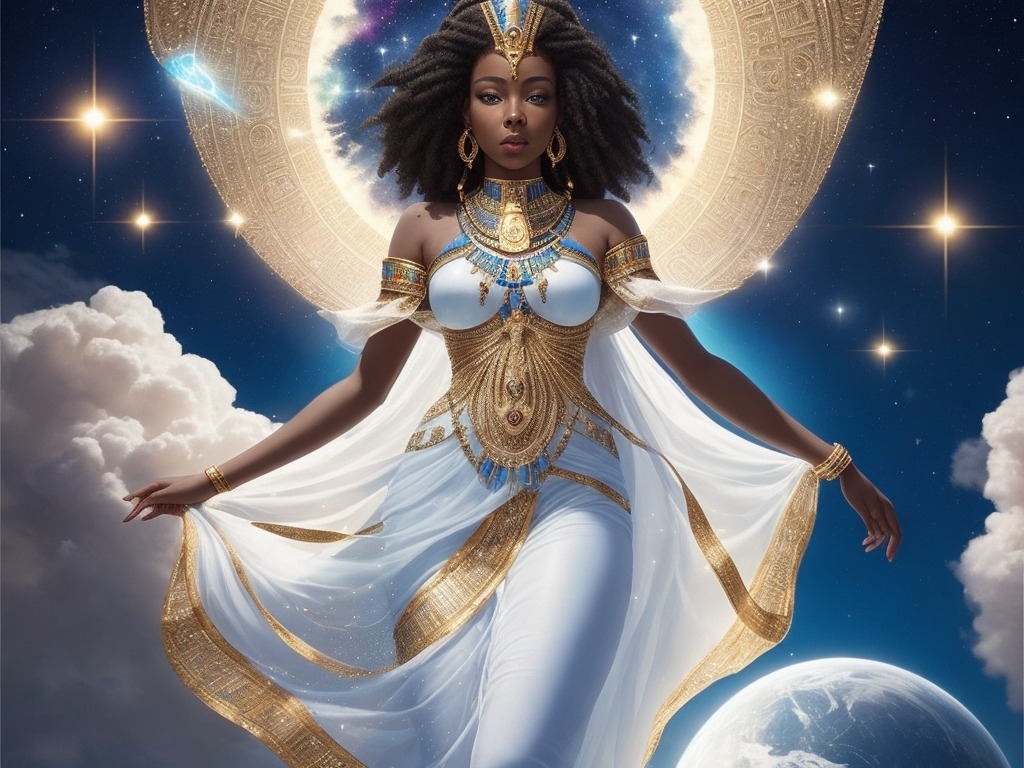
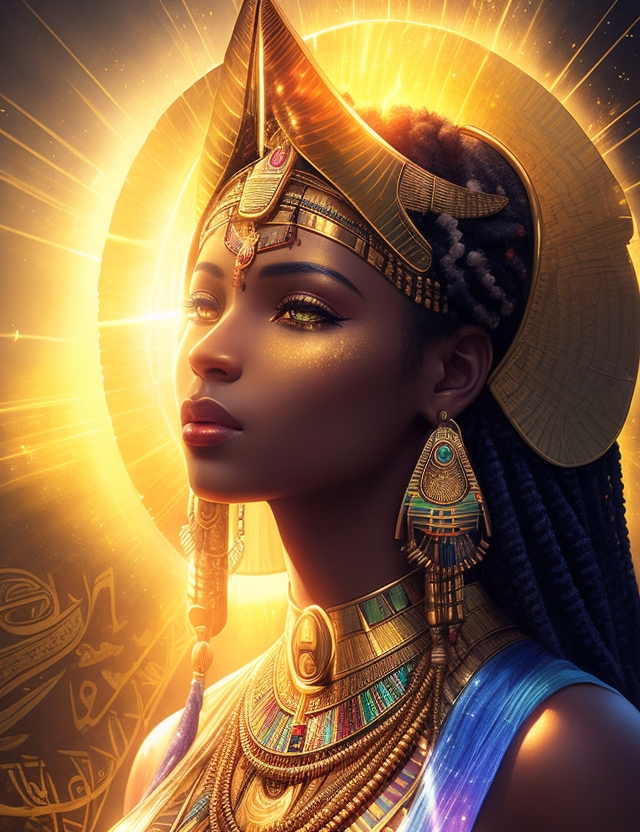
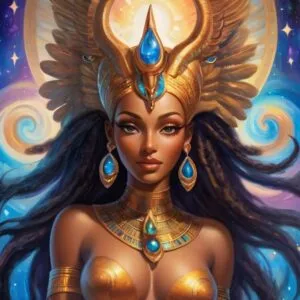
Introduction In ancient Egyptian and esoteric traditions, the concept of celestial beings holds great significance. These beings, believed to inhabit higher planes of existence, provide insights into the nature and purpose of the cosmos. Among these celestial beings, one deity stands out: Het Heru, also known as Hathor. With her captivating beauty, enchanting music, and nurturing nature, Hathor embodies the essence of the sacred feminine arts of creation. In this in-depth article, we will delve into the rich mythology and symbolism surrounding Het Heru, exploring her role as a celestial being and her impact on ancient Egyptian and esoteric traditions. Het Heru, which translates to the “House of Horus,” represents the primordial celestial realm from which beings like the sun god Horus emerged. As the personification of the creative power of nature, she is constantly conceiving and nurturing all things. Later known as Hathor, she assumed the role of the “Great Mother of the World” and became the ruler of heaven, earth, and the underworld. Adorned with stars, moon, and sun, Hathor took the form of a cosmic cow, symbolizing her role as the nurturer of all creation. She held a special place in ancient Egyptian mythology, caring for the souls of the deceased, as depicted in the sacred text, the Book of the Dead. It was believed that Hathor assisted the deceased in their journey into perpetual life, ensuring their safe passage and eternal existence. The Sacred Feminine Arts of Het Heru Hathor, as the embodiment of the sacred feminine, represents various aspects of life and creation. She is associated with beauty, music, sexuality, and motherhood. Hathor’s allure and charm are unmatched, captivating all who encounter her. Her beauty is not merely superficial but also represents the inner beauty and harmony that she inspires in others. Music plays a crucial role in Hathor’s mythology. She is often depicted playing the sistrum, a musical instrument associated with joy and celebration. The enchanting melodies produced by Hathor’s sistrum are believed to bring harmony to the world and uplift the spirits of both humans and deities alike. Hathor’s connection to sexuality and motherhood emphasizes her role in the cycle of life. As the divine mother, she nurtures and protects all living beings. Her maternal instinct and care extend not only to her divine children but to all creatures on earth. Hathor reminds us of the importance of nurturing, compassion, and the unconditional love of a mother. Celestial Realms and Spiritual Enlightenment The ancient Egyptians believed in the existence of higher planes of existence referred to as the “Meta Neter” or “Godhead.” This divine hierarchy consisted of multiple levels or spheres of increasing spiritual enlightenment. At the highest level resided the ultimate sacred essence, whether it be the Abrahamic God or other supreme deities. To commune with the celestial beings and embody their essence, the ancient Egyptians employed various techniques. One such method involved entering a trance state through focused imagination. By combining life force, concentrated mental images, and altered states of consciousness, individuals could connect with the celestial realms and attain both mundane and spiritual enlightenment. These practices were rooted in the teachings of Thoth, the god of wisdom, and the path of Osiris, the god of the afterlife. It was believed that by following this path and harnessing the power of Het Heru, one could fulfill all desires in this world and the next. Celestial Beings in Ancient Egyptian Mythology In ancient Egyptian mythology, celestial beings were not limited to the realm of Het Heru. Various orders of celestial beings inhabit different planes of existence. For example, the Akasada divas were believed to reside in the sky, while the Bumanta divas were connected to earth spirits underground. Angels were considered messengers between realms, bridging the gap between the celestial and earthly planes. These divine intermediaries played a crucial role in transmitting messages and facilitating communication between deities and humans. Additionally, figures like Enid of the Pleiades and Greek/Roman gods represented deities from other star systems and mythologies, highlighting the interconnectedness of celestial beings across cultures. Symbolism of Stars, Planets, and Astronomical Phenomena Stars, planets, and astronomical phenomena held sacred significance in ancient Egyptian and esoteric traditions. They were seen as teachings, influences on human spirituality, and symbols of essential energies and forces. The alignment of celestial bodies was believed to have a profound impact on human destiny and the course of events on Earth. The ancient Egyptians closely observed the movements of celestial bodies and linked them to various aspects of life. For example, the rising and setting of the sun symbolized birth and death, while the phases of the moon represented the cyclical nature of existence. Studying celestial phenomena, individuals could gain insights into the cosmic order and align their actions with the natural rhythms of the universe. Conclusion Het Heru, the divine goddess of beauty, music, and creation, holds a prominent place in ancient Egyptian and esoteric traditions. As the personification of the sacred feminine, Hathor embodies the nurturing essence of the creative power of nature. Her mythology and symbolism reveal her role as a celestial being and her impact on ancient Egyptian culture. Through her beauty, enchanting music, and nurturing nature, Hathor inspires and uplifts those who encounter her. Her connection to the sacred feminine arts of creation reminds us of the importance of beauty, music, sexuality, and motherhood in the cycle of life. The concept of celestial beings and their connection to higher planes of existence is prevalent in ancient Egyptian mythology. Celestial realms and spiritual enlightenment were sought after through various practices and teachings, allowing individuals to commune with celestial beings and attain both mundane and spiritual fulfillment. Stars, planets, and astronomical phenomena held deep symbolism in ancient Egyptian and esoteric traditions. They were seen as teachings and influences on human spirituality, guiding individuals to align their actions with the natural rhythms of the universe. In conclusion, Het Heru, with her divine beauty, music, and nurturing nature, continues to be revered as a powerful celestial …

The Divine Wisdom of the Egyptian Goddess Isis

Introduction In ancient Egypt, the goddess Isis was revered for her divine wisdom, magical abilities, and healing powers. She embodied the essence of the divine feminine, representing empathy, compassion, and nurturing love. This article explores the significance of Isis in Egyptian mythology and how her teachings continue to empower women to connect with their inner wisdom and intuition. Who was the Goddess Isis? Isis, the sister and wife of Osiris, played a central role in Egyptian mythology. She mourned deeply when her brother was murdered by their sibling Set. Through her extraordinary magical abilities, Isis was able to resurrect Osiris and conceive their son Horus. She is often depicted as a symbol of motherhood, cradling the newborn sun god in her arms. Isis exemplified feminine strength, using her intelligence and perseverance to overcome immense challenges. The Divine Feminine Virtues Embodied by Isis Isis was revered in ancient Egypt as the wife, sister, and mother. She symbolized motherhood, magic, wisdom, and healing. Beyond her physical attributes, Isis possessed profound spiritual knowledge that was imparted through the Sacred Mysteries tradition. Her resilience in resurrecting Osiris after his murder by Set served as a powerful example of feminine strength and empowerment. Mastery of Nature and Cosmology Isis was not only a powerful magician but also a master of the subtle energies of nature and cosmology. She possessed the ability to heal and counsel those who sought her aid, offering remedies for physical, emotional, and spiritual afflictions. While practical magic was a part of her teachings, Isis focused on cultivating intuition by quieting the mind and listening within. She recognized the power of dreams and symbols to convey mystical wisdom. The Mysteries of Isis Isis taught dream incubation rituals and dream interpretation skills to her priestesses in the Mysteries. Through these practices, devotees could receive prophetic visions and celestial insights. Rituals involving meditation, chanting, song, and dance were performed in Isis’ temples to commune with transcendent realms and connect with the Goddess herself. The Mysteries of Isis were esoteric spiritual rituals and teachings associated with specific gods and goddesses in ancient Egypt, Greece, and Rome. Relevance of Isis’s Wisdom in Modern Times In today’s fast-paced world, it is easy to lose touch with our inner knowing. However, cultivating intuition, empathy, and spiritual connection is crucial for leading fulfilling lives. Isis’s teachings serve as a reminder of the importance of embracing feminine virtues, which can foster personal empowerment and service to others. Her example of using adversity to cultivate compassion inspires resilience. By turning within through meditation, dreams, and divination, we can reawaken dormant gifts and nourish our souls. The Empowerment of the Sacred Mysteries The Sacred Mysteries associated with Isis involved initiation rituals and teachings that aimed to provide direct revelation, empowerment, and salvation. Central to these mysteries was the symbolism of Isis resurrecting Osiris after his murder. Initiates underwent ritual death and rebirth experiences to commune with the divine and unlock their spiritual potential. The Mysteries involved purifications, fasting, symbolic enactments of myths, and levels of initiation over many years. The Role of Isis’s Temples and Priestesses Isis’s temples, particularly those at Philae and Saïs in Egypt, served as prominent Mystery centers. Within these sacred precincts, female priests guided devotees through transformative rites and disciplines associated with the Mysteries. They imparted Isis’s knowledge of sacred symbols, dreams, magical arts, and intuition through meditation, ascetic practices, and ritual drama. The Sacred Mystery teachings focused on cultivating virtues such as compassion, courage, wisdom, and service. Seeking Salvation and Empowerment Devotees who undertook the Mysteries of Isis aspired to attain salvation and unity with the gods, mirroring Isis’s relationship with Osiris in life and after death. The sacred rites aimed to enlighten participants and empower them to alleviate suffering, just as Isis brought comfort and restored health to countless individuals. The Mysteries represented a tradition of spiritual and social empowerment through the wisdom of the divine feminine. Conclusion The Egyptian goddess Isis embodied divine wisdom, magic, and healing. Her teachings continue to inspire seekers to activate their intuition, overcome obstacles, and realize their higher potential through service. Reconnecting with goddesses like Isis can help restore balance in a world facing complex challenges. Her nurturing love and guidance serve as touchstones for the restoration of the soul and society. FAQ 1. What were the main attributes of the goddess Isis? Isis was revered for her divine wisdom, magical abilities, and healing powers. She embodied the divine feminine virtues of empathy, compassion, and nurturing love. 2. What were the Sacred Mysteries associated with Isis? When we talk about the mysteries of this or that, we usually mean something essential yet a little obscure, unknown, or badly understood: the mysteries of the universe’s genesis, the mysteries of life, the mysteries of the human psyche. However, the Sacred Mysteries of Isis are imperfect and sometimes hazy, and much remains unknown. The ancients themselves had something very precise in mind when they spoke about the Sacred Mysteries. How Isis Brought Her True Love Back From the Dead Season 1 Episode 3 Resources: Worship of this Egyptian goddess spread from Egypt to England https://www.nationalgeographic.co.uk/history-and-civilisation/2020/03/worship-of-this-egyptian-goddess-spread-from-egypt-to-england Isis | The Goddess of Fertility https://www.ancient-egypt-online.com/isis.html How Isis Brought Her True Love Back From the Dead https://www.pbs.org/video/how-isis-brought-her-true-love-back-from-the-dead-mex06g/

Genesis 1 and Babylonian Mythology: Bible vs Babel Connections

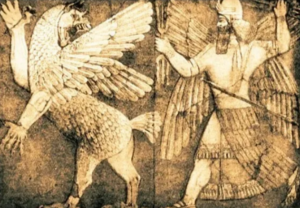
Genesis 1 and Babylonian Mythology: Unraveling the Connections The Genesis creation account has long fascinated scholars and laypeople alike, with its majestic vision of God bringing order from primal chaos in six days of creative work. Yet this biblical text has also been the subject of intense debate, as certain scholars assert that Genesis 1 borrows extensively from the mythology of ancient Babylon. In this article, I will critically examine the evidence for these alleged literary connections by analyzing the pertinent biblical and Babylonian texts. Our goal is to gain a deeper, more nuanced understanding of the relationship between Genesis 1 and Babylonian myths like the Enuma Elish through a balanced evaluation of similarities and differences. What emerges is a complex picture that challenges simplistic notions of direct borrowing. While superficial parallels can be found, closer scrutiny reveals fundamental theological divergences that call into question claims of dependence. By unveiling the multi-faceted nature of these ancient literary traditions, we can arrive at well-reasoned conclusions about Genesis and its unique vision among the cosmological myths of the ancient Near East. Exploring the Babylonian Context Before comparing Genesis 1 to Babylonian myths, we must first understand the context and nature of these non-biblical sources. One of the most significant Mesopotamian texts for our study is the Enuma Elish, an Akkadian epic named after its opening line, “When on high.” Spanning seven tablets, this epic narrates a cosmogonic myth centered around the rise of the god Marduk and his establishment of cosmic and political order through defeating the goddess Tiamat and her monsters in battle. The Enuma Elish served an important religious function in Babylon as the basis for the city’s New Year’s festival, the Akitu. During this 12-day festival, priests would ceremonially enact the myth’s drama to renew Marduk’s kingship and affirm Babylon’s status as the highest deity’s sacred city. As a product of Babylonian scribal schools meant to reinforce theology and ideology, the text emphasized Marduk’s supremacy over other gods like Anu and Ea through his creative acts. Beyond the Enuma Elish, Mesopotamian scholarship has uncovered numerous fragments of cosmological myths among tablets from places like Nippur and Uruk, indicating a diversity of creation traditions existed across ancient Mesopotamia. While some scholars assert Genesis borrowed from a single source like the Enuma Elish, the evidence suggests Genesis may have interacted with or adapted elements from a wider body of Mesopotamian myths. With this context in mind, we can now examine Genesis 1 in light of Babylonian mythology to analyze purported connections and divergences between the two traditions. Marduk and Zeus have a number of features in common, especially as Zeus emerges as lord of the cosmos. Kronos is very much a Qingu-like figure, especially in his battles with Ouranos, and as he emerges as lord of the cosmos. Likewise, there are parallels between Ti’amat of Enuma Elish and Gaia, who stirs up her children—the Titans—against their father. Enuma Elish (abbrv) Tablet I 1. When in the height heaven was not named, 2. And the earth beneath did not yet bear a name, 3. And the primeval Apsû, who begat them, 4. And chaos, Tiamat, the mother of them both,– 5. Their waters were mingled together, 6. And no field was formed, no marsh was to be seen; 7. When of the gods none had been called into being, 8. And none bore a name, and no destinies [were ordained]; 9. Then were created the gods in the midst of [heaven] (All gods, monsters, and other characters are celestial orbs, sometimes known as planets, dwarf planets, and moons. Tiamat was the largest planet, although Apsu, her counterpart, could still compete with the younger gods (planets). Their “waters mingling” might refer to a collision, the seeding of life on the other, or the drawing of more things into their orbit.”) Tablets II – III To recapitulate, these tablets detail the rising conflict between the gods and their progeny, as well as the arrival of the Supreme God, Marduk. (The arrival or birth of these additional planetary bodies (Gods) from Tablet I results in several planets surrounding Tiamat and Apsu, most likely hurling debris at them and appearing to be a nuisance. Then a rogue planet known as Marduk enters the newly formed Solar System.) Tablet IV 9. “Established shall be the word of thy mouth, irresistible shall be thy command; 10. “None among the gods shall transgress thy boundary. 11. “Abundance, the desire of the shrines of the gods, 12. “Shall be established in thy sanctuary, even though they lack (offerings). 13. “O Marduk, thou art our avenger! 14. “We give thee sovereignty over the whole world. 30. They give him an invincible weapon, which overwhelmeth the foe. 31. “Go, and cut off the life of Tiamat, 34. They caused him to set out on a path of prosperity and success. 47. He sent forth the winds which he had created, the seven of them; 93. Then advanced Tiamat and Marduk, the counsellor of the gods; 94. To the fight they came on, to the battle they drew nigh. 100. And her courage was taken from her, and her mouth she opened wide. 103. He overcame her and cut off her life; Tablet V 1. He.(i.e. Marduk) made the stations for the great gods; 2. The stars, their images, as the stars of the Zodiac, he fixed. 3. He ordained the year and into sections he divided it; 4. For the twelve months he fixed three stars. 5. After he had […] the days of the year […] images, 6. He founded the station of Nibir to determine their bounds; 7. That none might err or go astray, 8. He set the station of Bêl and Ea along with him. 9. He opened great gates on both sides 10. He made strong the bolt on the left and on the right. 11. In the midst thereof he fixed the zenith; 12. The Moon-god he caused to shine forth, the night he entrusted to him. …

Exploring the Intriguing Links Between Rh-Negative Blood and Extraordinary Phenomena

Abstract Rh-negative blood remains an enigma among genetic lineages. While comprising only 15% of the global population, those with Rh-negative blood present with certain unique physiological and behavioral traits. This article aims to comprehensively examine available research exploring the profound connections between Rh-negative genetics and reported experiences involving extra-terrestrial contact or heightened anomalous abilities. By synthesizing scientific evidence with anecdotal accounts, we endeavor to gain a broader perspective on humanity’s origins and capacities. Understanding Rh-Negative Blood The abrupt emergence of the Rh negative lineage roughly 45,000 years ago stands as one of humanity’s great evolutionary mysteries. What dramatic cosmic events may have precipitated this genetic divergence in our ancient past? Some theorists have speculated that contacts with intelligent visitors from the stars may have introduced novel DNA alterations into our bloodlines. While the precise causes remain unclear, the very singularity of this lineage’s emergence hints at forces beyond what science has yet explained. Just as the stars themselves whisper secrets of creation, could some long-ago astronomical occurrence—a supernova’s flare amid the night or a comet’s fall to earth—have seeded our nascent ancestry with novel code, shaping what was to come across the ages? What truths from dawn lie buried in our blood, waiting to be remembered? The Genetic Anomaly Rh-negative blood differs significantly from the predominant Rh-positive phenotype. Rh-negative individuals lack the 44-gene immunogenic Rh blood group system present in 85% of humans. The emergence of this distinct lineage roughly 45,000 years ago without recorded predecessors presents an evolutionary enigma requiring further elucidation. The abrupt emergence of the Rh negative lineage roughly 45,000 years ago stands as one of humanity’s great evolutionary mysteries. What dramatic cosmic events may have precipitated this genetic divergence in our ancient past? Some theorists have speculated that contacts with intelligent visitors from the stars may have introduced novel DNA alterations into our bloodlines. While the precise causes remain unclear, the very singularity of this lineage’s emergence hints at forces beyond what science has yet explained. Just as the stars themselves whisper secrets of creation, could some long-ago astronomical occurrence—a supernova’s flare amid the night or a comet’s fall to earth—have seeded our nascent ancestry with novel code, shaping what was to come across the ages? What truths from dawn lie buried in our blood, waiting to be remembered  Correlative Traits While not universally exhibited, common self-reported attributes of Rh-negatives include higher intelligence, sensitivity to heat or sunlight, psi talents, and distinctive physical features such as red or blonde hair with green or blue eyes. Surveys indicate Rh-negatives show disproportionate prevalence in European populations, particularly among Basque people of Spain and France. Their isolated language and high Rh-negative frequency of over 50% further shroud their ethnic origins. Nephilim and Anunnaki  Another, more ethereal, hypothesis holds that the biblical Nephilim are responsible for Rh-negative blood types. In the Book of Enoch, the Nephilim, also known as the Watchers, descend from heaven to marry with mankind, resulting in a human-angel hybrid. This group of angels and their descendants were wiped out in the great biblical flood, however some were supposed to have survived, preserving the Rh-negative blood line. Another strange hypothesis holds that the Anunnaki, an extraterrestrial race that helped form ancient Mesopotamian civilizations, engineered or crossbred with humans, and that some of this resulted in the Rh-negative blood type. People with Rh-negative blood are said to have unique physical characteristics as well as a predisposition for psychic phenomena and extraterrestrial contacts. Some of the features include: Higher than average IQ. Lower body temperature. High blood pressure Red or reddish hair. Extra vertebrae Sensitive vision, especially sensitivity to sunshine. Enhanced intuition Could there be any truth to this, or is it an elitist notion that a small percentage of the population possesses advanced extraterrestrial genetics? While there is little evidence to support these purported features, some have referred to occurrences of red-haired kings in ancient civilizations around the world as a possible connection. For example, in South America, some of the oddly shaped, oblong Paracas skulls were discovered to have red hair in a region where that hair color is not endemic. The gene that causes red hair originated in the Middle East and Europe. Breakaway archaeologists, including L.A. Marzulli, have linked these red-haired skulls to the Nephilim. Could Rh-negative blood type be another common factor? Exploring Associations with Anomalous Experiences There are also qualitative insights to be found in experiencers’ first-hand accounts. One recalled, ‘The large-headed beings conveyed feelings of profound compassion and curiosity about humanity’s development through images and sensations more than words.’ Honoring such wisdom may provide glimpses beyond what science has proven. Links to Reported Extraterrestrial Contact Several quantitative studies lend credence to the proposed correlation between Rh-negative blood and events involving purported extraterrestrial contact. The 1989 Commonwealth of Virginia Abduction Study interviewed 202 individuals, finding over 35% reported being Rh-negative despite this type only occurring in 15% of the general population. (1) Similarly, in the International Center for Abduction Research database of over 1,400 cases, Rh-negative proportions reached as high as 54% in some samples, far exceeding expected occurrences. (2) Commonalities also emerge from abductee accounts. Recurring descriptions of large-headed, large-eyed visiting beings closely resemble the physical traits of those with Rh-negative blood. (3) Research further suggests these entities may transmit telepathic communications, a capability Rh-negatives are theorized to be more receptive to based on brain structure deviations. (4) While contact motives remain enigmatic, some propose acquiring genetic samples for monitoring human evolution per alleged ancient astronaut theories of human-extraterrestrial hybridization programs. There are also qualitative insights to be found in experiencers’ first-hand accounts. One recalled ‘The large-headed beings conveyed feelings of profound compassion and curiosity about humanity’s development through images and sensations more than words.’ Honoring such wisdom may provide glimpses beyond what science has proven. Whether in dream or flesh, she could not say, but the message seemed clear: our fate and the stars are entwined in ways modern science has yet to grasp. Potential for Paranormal or PSI Abilities …

The Book of the Dead: Ascension to Immortality

The Book of the Dead: A Journey to the Afterlife In the vast and mystical realm of ancient Egypt, the belief in the afterlife held great significance. The Egyptians compiled personalized books for the deceased, known as the Book of Coming Forth by Day, or more commonly, the Book of the Dead. These sacred texts contained declarations and spells designed to guide and aid the departed on their journey to the afterlife. Among the numerous manuscripts, one stands out as a remarkable testament to this ancient belief system:  The Papyrus of Ani. In ancient Egyptian beliefs, death was not the end but rather the beginning of a journey of the soul to its divine source. Their elaborate funerary rituals and the Book of the Dead were aimed at assisting spirits to transcend the physical realm and ascend to their true immortal nature in celestial spheres. This article will explore what the Papyrus of Ani reveals about this mystical process of ascension and how its messages still hold relevance for seekers of spiritual Truth today. The Papyrus of Ani: A Glimpse into the Past The Papyrus of Ani is a fascinating artifact, a papyrus manuscript in the form of a scroll adorned with cursive hieroglyphs and vibrant color illustrations. Created around 1250 BCE during the Nineteenth Dynasty of the New Kingdom of ancient Egypt, it offers a unique insight into the religious practices and beliefs of the time. This manuscript was specifically compiled for Ani, a scribe from Thebes, and it provides a glimpse into the rituals and preparations undertaken by the ancient Egyptians for their journey to the afterlife. Unveiling the Secrets of the Papyrus The discovery of the Papyrus of Ani in Luxor in 1888 was a momentous event in the field of Egyptology. The scroll was found by Egyptians engaged in the illicit trade of antiquities. E.A. Wallis Budge, a renowned Egyptologist and the late Keeper of Assyrian and Egyptian Antiquities at the British Museum, acquired the papyrus. In his autobiography, “By Nile and Tigris,” Budge vividly describes the thrilling escapade surrounding the acquisition of this precious artifact. Shortly after Budge obtained the papyrus, Egyptian authorities apprehended several antiquities dealers and sealed their houses, one of which contained the objects Budge had purchased. In a daring act, Budge managed to distract the guards with a meal while locals tunneled under the walls of the house to retrieve the objects, including the Papyrus of Ani. Concealed within custom tin boxes, the papyrus and other acquired items were smuggled to the principal librarian at the British Museum. As a token of appreciation, Budge received a gratuity of 150 GBP from the British Treasury on behalf of the museum.   Belonging to the material world but originating from the heavens, humanity’s purpose, according to the ancient Egyptians, was to remember our celestial home through righteous living and spiritual cultivation. The Papyrus of Ani was meticulously crafted to guide the soul of its scribe, Ani, in traversing the inner planes to reconnect with the divine Light from which he came. Its symbolic illustrations and injunctions provide enduring guidance for traversing the inner dimensions to realize our eternal and transcendent nature. The Power of the Written Word For the ancient Egyptians, the act of writing or painting something down was a way of making it come true. The Book of the Dead, including the Papyrus of Ani, contains no depictions or descriptions of unpleasant events. This omission is not due to a lack of belief in the challenges of the afterlife but rather to a deliberate choice. By omitting such details, the Egyptians believed they could avoid attracting negative experiences. Instead, the emphasis was placed on invoking the names of relevant gods at crucial points along the journey. The Power of Inner Transformation For the ancient Egyptians, progress did not end with physical death but continued via initiations of the soul. The Papyrus of Ani omits descriptions of negative experiences not out of denial but because they recognize the power of focusing on divine qualities like Truth, Justice, and spiritual ascent. By invoking higher principles at each stage of One’s journey within, one transforms lingering attachments and untruths to ascend to their purified divine essence. The path laid in these sacred scrolls is thus one of inner illumination through aligning ever more closely with Truth. Ani’s Journey to the Afterlife The Papyrus of Ani chronicles Ani’s journey to the afterlife, a complex and intricate process involving mummification, passage through the underworld, and a final judgment by 42 gods. The text and illustrations within the papyrus provide a roadmap for Ani’s successful transition into the realm of the blessed. The journey begins with the process of mummification, a sacred ritual that ensures the preservation of the body for the afterlife. The papyrus depicts the intricate steps involved, from the removal of organs to the wrapping of the body in linen bandages. These meticulous preparations were believed to be essential for the soul’s continued existence in the afterlife. After the physical preparations, Ani’s soul embarks on a perilous journey through the underworld. The papyrus vividly illustrates the challenges and obstacles encountered along the way. It is during this journey that Ani encounters various deities and must recite the appropriate spells and declarations to navigate safely through each stage. The climax of Ani’s journey is the Hall of Judgment, where his heart is weighed against the feather of Ma’at, the goddess of truth and justice. In this pivotal moment, Ani must prove his worthiness by demonstrating a righteous life on Earth. The 42 gods preside over this judgment, carefully observing Ani’s actions and intentions. Ani’s Journey: A Blueprint for Inner Awakening Ani’s depicted passage can be seen as a map for an initiate’s awakening process even today. His mummification symbolizes transcending bodily limitations to realize the imperishable soul. Braving underworld challenges represents overcoming earthly illusions and karmic binds. Appearing before the gods of Ma’at denotes the enlightened vision arising through rightly balancing one’s actions and …

The Passionate Goddess Isis: Beloved Protector of Egypt

A Magical Deity With Healing Powers In the pantheon of ancient Egyptian gods and goddesses, Isis held a special place as a magical deity with extraordinary healing powers. Renowned for her ability to use words of power and ancient incantations, Isis possessed a profound understanding of the mystical arts. Her magical prowess was not limited to performing extraordinary feats but also extended to the realm of healing. The stories of her healing abilities are numerous and remarkable, with one particularly notable instance being her intervention to save her son, Horus, from a venomous scorpion sting. It is said that she employed her profound knowledge of herbal remedies and incantations to restore him to health. Through her compassion and gift of healing, Isis became a figure of adoration, inspiring deep love and devotion from the Egyptian people. A Loving Mother and Wife At the heart of Isis’s character lies her unwavering devotion and boundless love as a mother and wife. In countless depictions, Isis is portrayed cradling her infant son, Horus, in her arms, radiating maternal warmth and protection. Her love for her family knows no bounds, and her nurturing nature shines through in her role as a mother. Furthermore, Isis’s devotion extends beyond her immediate family to her beloved husband, Osiris. In the face of tragedy, her loyalty and determination to resurrect Osiris after his murder by his jealous brother, Set, serve as a testament to her unwavering love. Her relentless pursuit and magical abilities ultimately led to Osiris’s resurrection, inspiring awe and reverence among the ancient Egyptians. A Force of Fertility and Nature Isis’s influence extends far beyond her role as a mother and wife. In ancient Egyptian mythology, she is revered as a goddess of fertility, symbolizing the eternal cycle of life and the bountiful forces of nature. The fertile lands of Egypt owe much of their prosperity to Isis, who was believed to have the power to control the flooding of the Nile River. As the lifeblood of the nation, the Nile’s annual inundation brought fertility and abundance to the land, ensuring plentiful harvests. Isis’s association with the river and her ability to manipulate its waters bestow upon her the title of “Lady of the Nile.” Her nurturing nature and connection to the cycles of nature made her a beloved figure, celebrated as the bringer of life and prosperity. A Guiding Light in the Afterlife Isis’s significance extends beyond the mortal realm, as she played a crucial role in ancient Egyptian beliefs concerning the afterlife. As a benevolent and compassionate goddess, Isis guided the souls of the departed through the treacherous journey to the underworld. It was believed that she welcomed the deceased, introducing them to the gods of the afterlife and ensuring their safe passage and eternal rest. Her ability to resurrect her husband, Osiris, also linked her to the concepts of rebirth and renewal. Isis offered solace and guidance to the souls, providing hope and motherly comfort even in the face of death. Her presence in funerary rituals and her role as a guiding light in the afterlife cemented her status as a beloved protector of the departed. A Passionate Protagonist in Myth The tale of Isis and Osiris stands as one of the most captivating and enduring myths in ancient Egyptian mythology. It is a narrative that showcases the depths of Isis’s passion, intelligence, and unwavering determination. The story recounts the tragic murder of Osiris by his jealous brother Set, who dismembers his body and scatters the pieces throughout Egypt. In her grief, Isis embarks on a relentless quest to retrieve and reassemble her beloved husband’s remains. Through her immense magical powers and unwavering love, Isis triumphs over adversity, restoring Osiris to life, albeit in the realm of the dead. The story of Isis and Osiris serves as a poignant reminder that even in the face of unimaginable loss, love and devotion have the power to conquer despair and even death itself. It is a narrative that has inspired generations, invoking devotion and providing solace to those who have experienced profound loss. Beloved Protector of Egypt for Millennia Isis’s enduring legacy as the beloved protector of Egypt spans millennia. Her worship and reverence were not confined to a single era or dynasty. From pre-dynastic times to the height of ancient Egypt’s power and beyond, her name and influence resonated throughout the Nile Valley and the shores of the Mediterranean. Temples dedicated to Isis were centers of religious life, drawing devotees seeking her guidance, protection, and blessings. Even after the decline of the ancient Egyptian civilization, Isis’s name continued to be honored and revered, transcending time and borders. Her legacy as a goddess who watches over her people with a mother’s devoted care has solidified her immortal status among the gods of Egypt. In conclusion, the passionate Goddess Isis captivated the hearts and minds of the ancient Egyptians through her magical abilities, unwavering love as a mother and wife, and her connections to fertility and the cycles of nature. Her role as a guiding light in the afterlife provided solace and comfort to the departed, while her story of triumph over grief and adversity inspired devotion for generations. Isis’s legacy as the beloved protector of Egypt endures, ensuring her immortality in the annals of history and the hearts of those who still admire her today. Resources: Gardiner 1913; Steindorff and Wolf 1936, 47, fig. 11; David 2007, 186. Paris, Musée du Louvre, Département des Antiquités égyptiennes, N 3068, https://collections.louvre.fr/en/ark:/53355/cl010003125; D’Auria, Lacovara, and Roehrig 1992, 44. University of Manchester, Manchester Museum, 5886, http://harbour.man.ac.uk/mmcustom/Display.php?irn=100351.php. I would like to thank Campbell Price, curator of Egypt and Sudan, Manchester Museum, University of Manchester, for the generously granted rights of use. ︎ Kucharek 2005, 342–58. De Buck 1935, CT 50 = I.228b–c; see Assmann 2002, 279. Is this to be understood as the time for the final rites at the tomb shaft? On the connection between the course of the sun and the fate of the dead, which is …

Agartha: A Journey into the Depths of Inner Earth

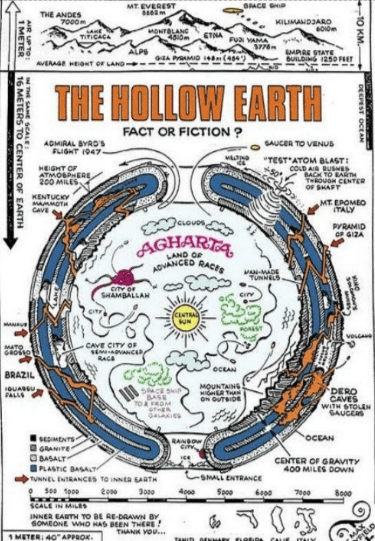
Agartha’s Enigma: A Journey into the Depths Deep beneath the majestic Himalayas lies an awe-inspiring mystery that has captivated the hearts and minds of adventurers, scholars, and seekers of wisdom for centuries. Agartha, the hidden civilization of inner Earth, beckons us to embark on a mesmerizing journey into the depths of this enigmatic realm. Join us as we explore the fragments of information from historical texts, intrepid explorers’ accounts, esoteric sources, and the astonishing discoveries made by Space Command and the Space Force. Legends and Origins: Unveiling the Secrets of Agartha Legends of subterranean worlds and ancient civilizations have woven their way through the tapestry of human history. From the Indian religions of Jainism, From Hinduism and Buddhism, which speak of the underground realm called Patala, to the tales of the Naga, the half-human, half-serpent guardians of this hidden world, the allure of Agartha persists. Mythologies and civilizations across the globe echo with stories of underground cities and enigmatic tunnels. The Sacred Path: Unearthing Agartha’s Secrets Embarking on the trail to uncover Agartha’s secrets leads us through a labyrinth of obscure documents, riddles from wise Buddhist lamas, and the mysterious teachings of the Cult of Agartha. In the 19th century, the enigmatic philosopher and occultist Alexandre Saint-Yves played a pivotal role in shedding light on Agartha as more than a mere allegory or fantasy. His work, “Mission of the Jews,” and encounters with Brahmins from North India unveiled glimpses of the hidden knowledge preserved within the sacred chambers of Agartha. Recent groundbreaking research by Space Command and Space Force has brought us closer to unraveling the enigma of Agartha. Through satellite imagery, ground-penetrating radar, and advanced mapping technologies, a vast network of interconnected tunnels spanning continents, from the mystical lands of India to the enigmatic depths of Afghanistan, has been revealed. These remarkable findings provide compelling evidence of ancient underground civilizations and their profound connection to Agartha. The Kingdom of Agartha Unveiled: Where Gods Once Walked According to various accounts, Agartha was once a majestic above-ground civilization that thrived on an isolated island. The Agarthians, blessed with godlike powers, communicated with the outer world through a labyrinthine network of deep tunnels, which today stand as ancient ruins and sacred recesses. These tunnels, substantiated by the astonishing discoveries of Space Command and Space Force, are not mere myths but tangible remnants of a glorious past. Advanced imaging technologies and geological surveys have confirmed the presence of extensive underground tunnel systems, interwoven with the very fabric of Agartha’s existence. Agartha’s advanced civilization was governed by a sovereign pontiff and his esteemed colleagues, bearers of immense wisdom and knowledge. However, cataclysmic events or external forces eventually forced Agartha into the subterranean realm, hidden from the eyes of the outside world, where it evolved independently for countless millennia. The remarkable discoveries made by Space Command and Space Force hint at the possibility that Agartha’s underground civilization may still thrive, safeguarding ancient wisdom and harnessing advanced technologies. Echoes of Agartha: Verifiable Mentions and Intriguing Connections Verifiable mentions of Agartha can be found within the annals of ancient texts and writings. The works of Jacolliot from the 19th century depict Asgartha, a hidden underground city ruled by priest-kings. Ernest Renan’s references to Asgaard further reinforce the existence of Agartha. The investigations of Russian occultist Helena Blavatsky, delving into the sacred texts that speak of Tibet as a great seat of occult learning and a sacred island, add depth and substance to the lore of Agartha. The remarkable findings of Space Command and Space Force shed new light on Agartha’s influence on human history and its potential connection to other realms. Through the meticulous analysis of satellite images and data collected from daring missions, anomalies beyond the icy confines of Antarctica have been detected, hinting at unexplored lands and hidden civilizations. These awe-inspiring revelations have ignited lively debates and ignited the imagination of researchers, further deepening the enigma surrounding Agartha and its enthralling ties to the wider universe. The Inhabitants of the Inner Earth Legends tell of an advanced civilization that once lived below the surface of our planet. An article by researcher Brad Steiger recounts stories of “The Ancient Ones,” a highly intelligent species said to have inhabited Earth for millions of years before mysteriously disappearing underground. According to Steiger, the Ancient Ones developed sophisticated subterranean cities and created technology to meet their needs. They were human-like but lived much longer lives and existed nearly a million years before modern humans. Tales describe the Ancient Ones as occasionally welcoming human children into their communities to teach and nurture, despite generally avoiding contact with surface dwellers. The Elder Race: Another controversial story involves Richard Shaver, who claimed to have visited the remains of an underground society. In 1945, he published his account in Amazing Stories magazine, edited at the time by Ray Palmer. Despite skepticism from some who thought he was unwell, Shaver insisted his experience was genuine. He says long ago, otherworldly visitors known as Titans transported the Elder Race to our planet. Eventually realizing our sunlight accelerated their aging, these advanced people built extensive underground shelters. They eventually chose to depart Earth for another world, taking their subterranean metropolis and artificial citizenry with them. Shaver said the robotic Dero and the benevolent Tero were among the beings he encountered within. Agartha’s Heart: The Connection to Inner Earth and Shambhala As we delve deeper into the enigmatic realm of Agartha, we uncover a profound connection that links this hidden civilization to both Inner Earth and the legendary kingdom of Shambhala. Agartha’s heart beats in harmony with these mystical realms, revealing a tapestry of ancient wisdom, spiritual enlightenment, and hidden knowledge. Within the vast depths of the inner Earth, Agartha finds its home. It is believed that beneath the Earth’s surface exists a vast network of interconnected tunnels and chambers, intricately woven together like the intricate veins of a living organism. These tunnels serve as conduits, connecting Agartha to various sacred sites and power centers around …

The Boys From Brazil: Cloning and the Echoes of Ancient Mindsets

The Boys From Brazil: Nazis, Enki, Enlil, and Marduk Echoes of Human Identity Table of Contents: Introduction: Unraveling the Intriguing Mindsets: Ancient Gods, Cloning, and Modern Men I. The Mythical Origins: Enki, Enlil, and Marduk Exploring the Powers and Personalities of the Ancient Gods Enki: The Creator and Patron of Humanity Enlil: The Rigid Ruler and Enforcer of Order Marduk: The Ambitious and Rebellious God II. The Intriguing Parallel: Cloning and Ancient Mythology Cloning: The Modern-Day Equivalent of Ancient Creation Delving into the Moral and Ethical Dilemmas of Cloning III. Cloning and “The Boys From Brazil” The Horrifying Plan Unveiled: Clones and the Fourth Reich Josef Mengele: The Modern-Day Equivalent of Enki’s Scientific Prowess The Legacy of Nazi Cloning Experiments: Echoes of Enlil’s Command IV. The Psychological Impact: Cloning and Identity The Struggle for Individuality: Clones and Their Sense of Self Nature vs. Nurture: Ancient Gods and the Shaping of Human Identity V. Cloning in Fiction and the Power of Speculation The Boys From Brazil: A Gripping Tale of Clashing Mindsets and Cloning The Influence of Ancient Mythology on Contemporary Cloning Narratives VI. The Ethical Debate: Balancing Science and Morality The Implications of Cloning: Society’s Responsibility and Ethical Considerations Learning from Ancient Wisdom: Lessons on Cloning from the Mythical Gods Conclusion: The Boys From Brazil and the Eternal Questions: Cloning, Ancient Mindsets, and Human Identity In this detailed article, we will delve into the connections between ancient mindsets, cloning, and the characters in “The Boys From Brazil.” We will explore the parallels between cloning and ancient creation, uncover the horrifying plan of the Fourth Reich, and analyze the psychological impact of cloning on identity. Additionally, we will discuss the power of speculation in fiction and the ethical debate surrounding cloning. By drawing insights from ancient mythology, we will shed light on the enduring questions raised by cloning in the modern world. Unraveling the Intriguing Mindsets: Ancient Gods, Cloning, and Modern Men Introduction: In the realm of mythology, ancient gods held immense power and shaped the course of human history. Their mindsets, motivations, and actions continue to captivate our imaginations. Interestingly, these ancient mindsets find echoes in modern storytelling, including the chilling tale of “The Boys From Brazil.” As we explore the connections between ancient mindsets, cloning, and the characters in this gripping narrative, we embark on a journey that reveals the timeless relevance of these themes. I. The Mythical Origins: Enki, Enlil, and Marduk Exploring the Powers and Personalities of the Ancient Gods In ancient Mesopotamian mythology, Enki, Enlil, and Marduk were prominent deities who each possessed distinct mindsets and played pivotal roles in the creation and shaping of humanity. Enki, known as the creator and patron of certain groups of humanity, displayed a lack of a compassionate and nurturing mindset. Enlil, the rigid ruler and enforcer of order, exemplified a strict sense of authority. Marduk, the ambitious and rebellious god and son of Enki, embodied the desire for power and conquest. II. The Intriguing Parallel: Cloning and Ancient Mythology Cloning: The Modern-Day Equivalent of Ancient Creation One cannot help but draw parallels between the act of cloning and the ancient gods’ role in creation. Cloning, with its ability to replicate and recreate life, mirrors the power of the gods to shape and manipulate existence. The moral and ethical dilemmas surrounding cloning raise thought-provoking questions about the boundaries of science and the potential implications for humanity. III. Cloning and “The Boys From Brazil” The Horrifying Plan Unveiled: Clones and the Fourth Reich In “The Boys From Brazil,” the chilling narrative centers around a diabolical plan involving cloning and the creation of the Fourth Reich. The infamous Josef Mengele, the modern-day equivalent of Enki’s scientific prowess, spearheads this horrifying project. Mengele’s obsession with creating a master race, echoing Enlil’s command for order, becomes the catalyst for an intense investigative journey. IV. The Psychological Impact: Cloning and Identity The Struggle for Individuality: Clones and Their Sense of Self Cloning, with its profound implications, gives rise to an array of psychological challenges for both the clones and those who encounter them. In “The Boys From Brazil,” the clones, created to perpetuate the ideals of the Fourth Reich, face a unique struggle for individuality and identity. This struggle mirrors the psychological impact that ancient gods, such as Enki, Enlil, and Marduk, had on the humans they shaped. Like Enki, the compassionate and nurturing god, the clones yearn for a sense of belonging and acceptance. They grapple with questions of purpose and their place in the world, much like Enki’s role in guiding humanity and fostering their development. The clones’ psychological journey reflects the intrinsic human desire for connection and meaning. On the other hand, echoes of Enlil’s rigid mindset can be observed in the clones’ struggle to conform and fit into the mold predetermined for them. The clones, like Enlil’s pursuit of order and control, face external pressures to adhere to a predetermined path that denies them the opportunity for individual growth and self-determination. This internal conflict highlights the psychological consequences of suppressing one’s true self and succumbing to societal expectations. Furthermore, the ambitious and rebellious nature of Marduk resurfaces in the clones’ quest for autonomy and their pursuit of freedom from the shackles of their predetermined fate. Like Marduk, who challenged the established order of the gods, the clones yearn to break free from the chains that bind them and seek to forge their own destinies. This psychological struggle for independence showcases the innate human need for self-determination and personal agency. By exploring the psychological dimensions of the mindsets associated with Enki, Enlil, and Marduk, we gain a deeper understanding of the internal battles faced by the characters in “The Boys From Brazil.” These psychological undercurrents add layers of complexity to the narrative, making it all the more gripping and thought-provoking. V. Cloning in Fiction and the Power of Speculation The Boys From Brazil: A Gripping Tale of Clashing Mindsets and Cloning “The Boys From Brazil” is a work of speculative fiction …